
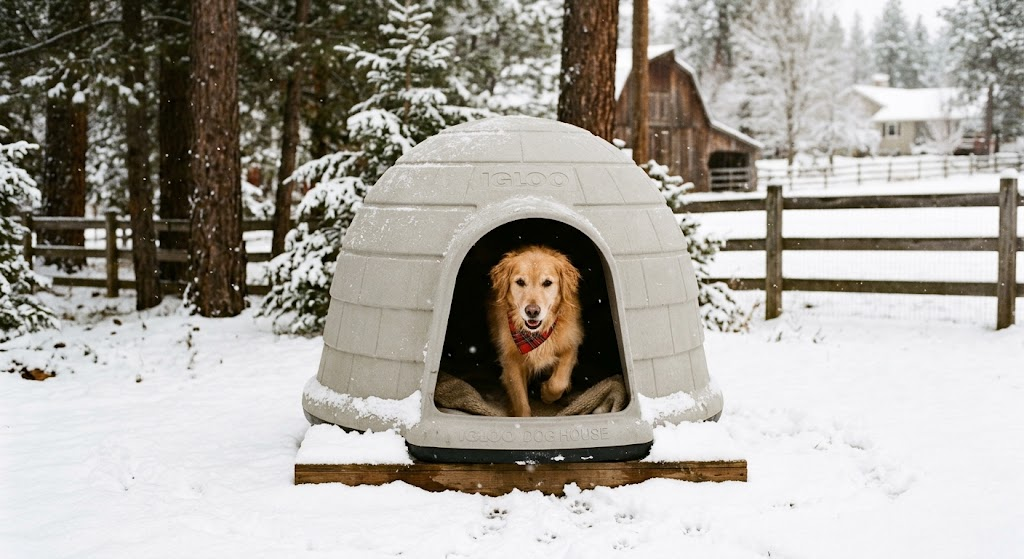
Do igloo dog houses keep dogs warm? Yes, in mild to cool weather, when the house is the right size and set up correctly. The dome shape and tunnel style entrance trap body heat well and block wind better than many boxy houses. But an igloo is not a heater, and it does not make it safe for a dog to stay outside in dangerous cold.
This guide explains how igloo dog houses work, who they suit, and how to size one. It also includes an Igloo Fit Check to decide whether it is the right choice for your dog, and a winter setup routine that makes a real difference to how warm your dog stays.
The Quick Answer
- Best for: Dogs that spend part of the day outside in mild to cool weather and need a sheltered place to rest.
- Warmth: Good at holding body heat when the house is snug, dry, and off the cold ground.
- Biggest mistake: Buying too large. A house that is too roomy is hard for your dog to warm up.
- Summer risk: Plastic domes can heat up fast, so shade and airflow matter.
- Not a replacement for indoor shelter in freezing temperatures, high wind, or wet snow.
What Is an Igloo Dog House?
An igloo dog house is a rounded dome, usually made of molded plastic with a foam insulated shell, and it has a small opening that works like a tunnel. The curved shape sheds rain and snow, resists wind, and keeps the interior compact so your dog’s body heat does the heating work.
Compared with a traditional wood house:
- Igloo (plastic dome): lightweight, easy to clean, weather resistant, often more affordable, and good at retaining heat in a small space. It can get hot in direct summer sun.
- Wood house: sturdier, more customizable, and easier to insulate or add features to, but heavier and harder to clean, and wood can rot if it stays wet.
Neither is automatically better. The right choice depends on your climate, your dog, and how much time your dog really spends outside.
Do Igloo Dog Houses Actually Keep Dogs Warm?
They help, but the effect has limits. An igloo works by trapping the warmth your dog produces, not by creating heat. That is why three things decide whether it works:
- Size. A snug house warms up faster. An oversized one stays cold.
- Dryness. Wet bedding steals heat quickly. Keep the interior dry.
- Separation from the ground. Cold earth pulls warmth out of the house, so elevate it.
Even the best igloo cannot protect a dog from very low temperatures, strong wind, or freezing rain for long. Small dogs, short coated breeds, puppies, seniors, and dogs with health problems lose heat faster and should not rely on a dog house in cold weather. Check your dog’s specific risk with our dog cold weather risk calculator, and see how wind chill affects dogs because wind can make a mild day dangerous.
Igloo Fit Check: Is This the Right House for Your Dog?
Answer these six questions honestly.
- Does your dog have a thick double coat (like a husky or malamute type), or a thin single coat?
- Is your dog healthy and in good body condition? Dogs that are underweight or carrying health issues lose heat faster. Our dog weight and body condition score checker can help you judge.
- How cold does it get where you live, and for how long?
- Is the spot exposed to wind, rain, or snow drifts?
- How many hours a day is your dog outside on its own?
- Do you have a safe indoor place to bring your dog when conditions turn bad?
If your dog has a thick coat, is healthy, lives in a mild or cool climate, and is only outside for part of the day, an igloo is a strong choice. If your dog is thin coated, young, old, or you face hard freezes, an igloo is a backup shelter, not a main one.
How to Size an Igloo Dog House
Size is where most buyers go wrong. You want your dog to stand, turn around, and lie down comfortably, but not much more.
Measure Your Dog
- Length: From the tip of the nose to the base of the tail.
- Height: From the floor to the top of the shoulder while standing.
Use These Rules of Thumb
- Interior length and width: about 1.25 times your dog’s length.
- Interior height: about 1.25 times your dog’s standing shoulder height, enough to stand and turn without wasted space.
- Doorway: wide enough for your dog’s shoulders to pass. Most dogs duck in, so the doorway height should be at least about three quarters of shoulder height.
Then compare your numbers with the manufacturer’s size chart. Most use weight ranges, which are a rough guide only. As a general idea, small houses fit dogs up to about 25 lb, medium houses fit roughly 26 to 50 lb, and large houses fit roughly 51 to 90 lb, with extra large options beyond that.
If your dog is between sizes, choose the smaller one for cold climates. For hot climates, a slightly larger house gives more airflow. If you want a second measurement exercise, our dog crate size calculator uses a similar approach.
Winter Setup: 7 Steps That Make an Igloo Warmer
- Elevate it. Place it on a pallet, platform, or blocks so cold ground does not drain heat.
- Face the entrance away from the wind, usually away from north and west in much of the US, and ideally toward a wall or fence for shelter.
- Put it in a sheltered spot, such as near a wall, under an overhang, or on the lee side of a building.
- Use straw for bedding. Straw stays drier and insulates better than blankets, which soak up moisture and freeze. Replace it when damp.
- Add a door flap. A heavy vinyl or rubber flap blocks wind and holds heat. Make sure your dog can push through it easily.
- Keep it dry. Make sure the floor and bedding do not collect water, and brush snow away from the entrance.
- Check water. Outdoor bowls freeze fast. Read about why dogs drink less water in winter, and use a heated or frequently replaced bowl.
What Not to Do
- Do not use heat lamps or space heaters inside or near a dog house. They are a fire and burn risk.
- Do not use heated pads unless they are made for pets, rated for outdoor use, and have chew resistant cords.
- Do not stuff the house with blankets and cushions. They trap moisture and can freeze.
- Do not leave a dog without access to shelter, food, and unfrozen water. Many places have laws about adequate shelter for outdoor dogs, so check your local rules.
Cold weather also raises your dog’s energy needs outdoors. If your dog spends long hours outside, read about whether dogs need more food in winter.
Summer Problem: Igloos Can Get Hot
A dark plastic dome in direct sun can turn into an oven. If you use an igloo year round:
- Place it in full shade, under a tree or cover.
- Keep the doorway open and remove any winter flap.
- Make sure there is airflow and a cooler spot like a shaded patio or indoor access.
- Provide plenty of fresh water.
Never count on a dog house to protect a dog from heat. Use our dog heatstroke risk calculator to see how risky the conditions are for your dog.
Who Should Not Rely on an Igloo?
- Puppies and senior dogs
- Toy and small breeds, and thin coated dogs
- Dogs with arthritis, which can get stiff and sore in cold weather (see dog arthritis and cold weather)
- Dogs with heart, kidney, or other chronic conditions
- Any dog during freezing temperatures, wet snow, or high winds
These dogs belong indoors when the weather turns harsh. A good indoor bed also helps, so see our guide to a waterproof orthopedic dog bed if you want something supportive and easy to clean.
Frequently Asked Questions
Are igloo dog houses warm enough for winter?
They can be warm enough for mild to cool winters when properly sized, elevated, and filled with straw. In freezing temperatures or strong wind, even a good igloo may not be enough, and your dog should come indoors.
Are igloo dog houses good for large dogs?
Yes, as long as you pick a model sized for your dog’s measurements. Large dogs generate more body heat, which helps, but the house must still be snug and elevated.
Should I put a blanket in an igloo dog house?
Straw is generally better outdoors. Blankets and towels hold moisture and can freeze, which makes the house colder.
Can I insulate an igloo dog house more?
Most already have insulation in the shell. You can add a door flap, raise the house off the ground, and use straw. Avoid adding materials a dog could chew or that trap moisture.
How big should an igloo dog house be?
About 1.25 times your dog’s length and height, with a doorway wide enough to enter easily. Smaller is warmer, as long as your dog can stand, turn, and lie down.
Are igloo dog houses safe in summer?
Only in full shade with good airflow. Plastic domes can overheat in direct sun, so do not rely on them alone in hot weather.
Is an igloo better than a wood dog house?
It depends. Igloos are lighter, easier to clean, and good at holding heat in small spaces. Wood houses are sturdier and easier to customize. Pick based on your climate and your dog’s coat.
The Bottom Line
Igloo dog houses are a smart, affordable shelter for dogs that spend part of the day outside in mild to cool weather, as long as the size is snug, the house is elevated and dry, and the entrance is protected from wind. They are not a safe place to leave a dog in dangerous cold or heat.
Use the Igloo Fit Check, size the house carefully, and set it up with straw and a door flap. When the weather turns harsh, your dog belongs inside.