
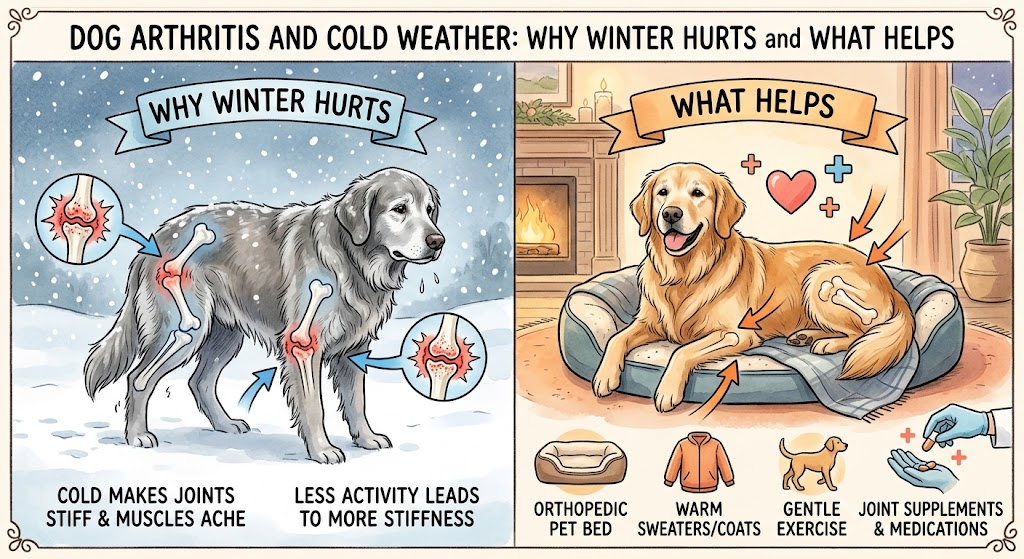
Short answer: Cold weather does not cause arthritis, but many dogs with arthritis look stiffer and sorer in winter. Vets and owners see this pattern often, although research on weather and pain in dogs is limited. The practical response is the same either way: keep joints moving and warm, make your home easier on sore legs, keep your dog lean, and see your vet for pain relief that is safe for dogs. Never give human painkillers.
Does cold weather make dog arthritis worse?
Probably, in the sense that symptoms become easier to notice. The honest picture is that studies are mixed, but several things happen in winter that plausibly make a sore dog look worse:
- Cold muscles and joints feel stiffer after rest.
- Dogs move less, so muscle weakens and joints get less support.
- Wet, icy, and tile floors are harder to grip.
- Dogs lie on cold surfaces and then have to stand up from them.
So cold is more often the trigger that exposes the pain than the cause of it. That matters because it means the answer is not “wait for spring.” Arthritis is there all year, and winter is when it becomes hard to ignore.
Signs your dog’s joints hurt in cold weather
- Stiffness when getting up, especially in the morning or after a nap
- A slow start on walks that loosens up after a few minutes
- Limping that changes from day to day
- Hesitating at stairs, or at jumping onto the couch or into the car
- Licking or chewing at a joint
- Sleeping more, playing less, or seeming irritable when touched
- Slipping on smooth floors
Dogs hide pain well. Slowing down is not just “getting old,” and it is worth taking seriously.
The 7 day stiffness log
Most guides tell you to “watch your dog.” A short written log is more useful, for you and for your vet. Rate your dog every morning and evening on this simple home scale (it is not a clinical score):
| Score | What you see |
|---|---|
| 0 | Gets up and moves freely |
| 1 | A little slow for the first minute or two |
| 2 | Clearly stiff, limps for several minutes |
| 3 | Struggles to stand or will not walk |
Add one note each day: cold or mild weather, how long the walk was, and anything unusual. After seven days, look for patterns.
- Mostly 0 to 1, with a worse score on the coldest mornings: likely mild, and the home changes below may be enough.
- Frequent 2s: book a vet visit and bring the log.
- Any 3, or scores getting worse: call your vet soon.
The Senior Dog Wellness Check-In covers the broader picture (appetite, energy, behavior) and pairs well with the log.
What helps dogs’ joints in winter
| Area | What to change |
|---|---|
| Floors | Add rugs, runners, or yoga mats on tile and hardwood so paws can grip |
| Bed | Use a thick, supportive bed away from drafts and off cold floors |
| Stairs and car | Use ramps or steps. Lift small dogs instead of letting them jump |
| Walks | Go shorter and more often at a steady pace, and start with a few minutes of slow walking. Avoid ice |
| Weight | Extra weight puts extra load on joints. Weigh monthly and check ribs with the Body Condition Score Checker |
| Muscle | Gentle, steady exercise helps protect muscle. See why a “normal” body score can hide muscle loss |
| Warmth | Short-haired, small, or very stiff dogs may do better in a coat. See the Cold Weather Risk Calculator |
One common mistake is cutting walks completely because it is cold. Inactivity makes stiffness worse. Keep moving, just in smaller pieces. The Dog Walking Time Calculator can give you a baseline, and you can scale down on stiff days.
What can I give my dog for joint pain?
Start with what not to give. Do not give your dog ibuprofen, naproxen, aspirin, or acetaminophen unless your vet specifically tells you to. These can cause stomach ulcers, kidney damage, or liver damage in dogs, and some are toxic.
What your vet may offer instead:
- Dog-specific anti-inflammatory or pain medication
- A weight-management plan
- Physical therapy or gentle rehab exercises
- Joint supplements such as omega-3 fatty acids or glucosamine and chondroitin (the evidence varies, and product quality varies too)
- Other treatments for more advanced cases
Do not start supplements or medication on your own. Your vet can check for other causes, choose the right product, and avoid interactions with anything your dog already takes.
When to see the vet
- Sudden or severe limping, yelping, or refusing to put weight on a leg
- A swollen or warm joint
- Stiffness that lasts more than a couple of weeks or keeps getting worse
- Loss of appetite, behavior change, or snapping when touched
Bring your stiffness log, a short phone video of your dog walking, and a list of any medications and supplements.
FAQ
Does cold weather make dog arthritis worse?
Many dogs with arthritis seem stiffer in the cold, though research is limited. Cold usually makes existing pain more noticeable rather than causing it.
Why does my dog limp more in cold weather?
Cold muscles and joints stiffen, less activity weakens support, and slippery floors make movement harder. A limp that keeps showing up deserves a vet visit.
What helps dogs’ joints in winter?
Warm, supportive bedding, grip on floors, ramps, short frequent walks, a healthy weight, and a vet plan for pain relief.
What can I give my dog for joint pain?
Ask your vet. Never give human painkillers such as ibuprofen, naproxen, aspirin, or acetaminophen.
Should I still walk a dog with arthritis in cold weather?
Yes, in shorter and more frequent walks, with a slow start. Avoid ice.
Does cold weather affect a dog’s joints even without arthritis?
Some dogs, especially older or very lean ones, stiffen in the cold. If it is new for your dog, have your vet check the joints.
General information, not veterinary advice.