
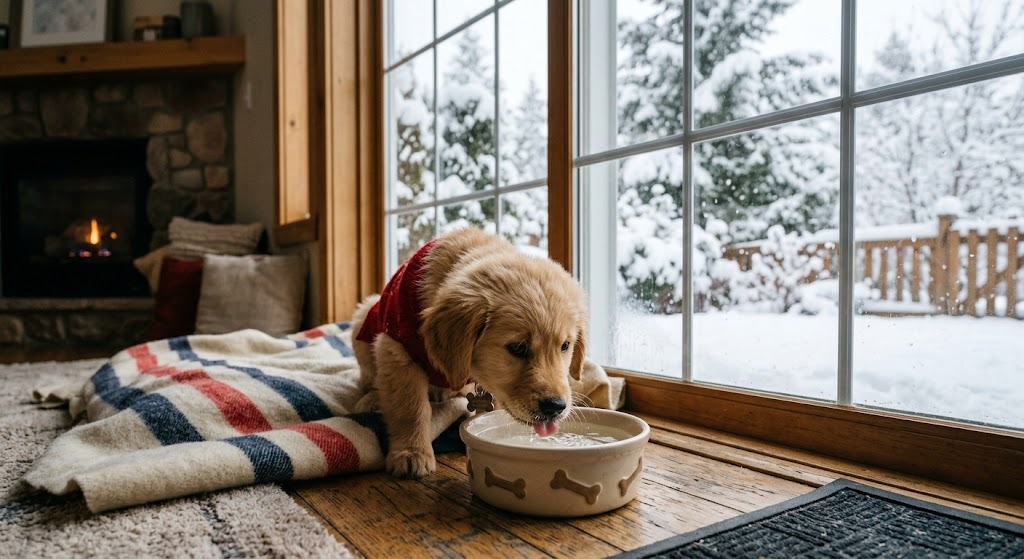
The water bowl is still nearly full at the end of the day, and it’s been that way since the temperature dropped. If you’ve noticed your dog drinking less in cold weather, you’re not imagining it, and in most cases it’s perfectly normal.
Here’s the short version: many dogs do drink less in winter, mostly because they pant less, move less, and don’t overheat. But a drop in thirst doesn’t mean a drop in how much water their body needs, and a few winter conditions can quietly make dehydration more likely. This guide covers why it happens, how to tell a normal dip from a real problem, and what actually helps when your dog won’t drink.
Why Dogs Drink Less in Winter
Several things add up to a quieter water bowl:
- Less panting. Dogs cool themselves by panting, which costs them fluid. In cold weather they do much less of it, so they lose less water and feel less urge to replace it.
- Less exercise. Shorter, slower winter walks mean less exertion and less thirst afterward.
- Colder, sometimes frozen water. Water sitting in a cold room or an unheated outdoor bowl is less appealing to some dogs, and outdoor bowls can freeze solid.
- Snow-eating. Some dogs nibble snow outdoors and then ignore the bowl. Snow isn’t a reliable substitute, because the amount a dog eats is small and inconsistent.
- Dry, heated indoor air. Heating systems dry out the air, which can pull moisture from your dog even while their thirst signal stays quiet. This is the main reason a “normal” dip can turn into mild dehydration.
- Stiff joints. Dogs with arthritis may make fewer trips to the bowl when the cold makes getting up uncomfortable. Our guide on dog arthritis and cold weather explains what to watch for.
Normal Winter Dip or Something Else?
“Drinking less” is hard to judge by eye, so measure it. For a single day, note how much water you put in the bowl in the morning, then measure what’s left the next morning. Do this once or twice and compare it with how much your dog usually drinks in milder weather. A common rule of thumb for a healthy dog is roughly one ounce of water per pound of body weight per day, though it varies with size, diet, and activity. Our Dog Water Intake Calculator gives you a starting estimate for your dog’s size and lifestyle.
Remember to count moisture from food. A dog eating canned food or kibble soaked in water takes in far more fluid through meals than one eating dry kibble, which is mostly dry matter.
Once you know the number, compare the pattern, not just the amount:
| What you’re seeing | Usually a normal winter dip | Worth a call to your vet |
|---|---|---|
| Amount | Somewhat less than in summer, changing gradually over weeks | Sudden drop from one day to the next, or no water at all for a full day |
| Energy and appetite | Normal energy, eating as usual | Lethargy, weakness, vomiting, diarrhea, or refusing food |
| Drinking habits | Drinks after meals or walks, even if less often | Noticeably drinking much more than usual, or urinating much more |
| Gums and mouth | Moist, normal color | Dry, sticky, or tacky gums, thick saliva |
Notice the third row. Drinking a lot more than usual is not a winter pattern, and it can point to conditions such as diabetes or kidney disease, so it’s worth a vet visit rather than waiting for spring.
How to Get a Dog to Drink More Water in Winter
If your dog is healthy but just isn’t drinking much, these steps usually help:
- Offer lukewarm water. Very cold water doesn’t appeal to every dog. Room-temperature or slightly warm water is often more inviting.
- Refresh the bowl often. Fresh water tastes better and gets noticed more than a bowl that’s been sitting out. Wash the bowl regularly too.
- Put bowls in more places. A bowl near where your dog naps and one near their food makes drinking an easy decision.
- Add water to meals. A few tablespoons of warm water stirred into kibble is one of the easiest ways to raise fluid intake.
- Use wet food or toppers. Canned food is mostly water, so even mixing some into kibble helps. If you’re adjusting meals for the season, our guide on whether dogs need more food in winter covers the calorie side, and our Feeding Calculator can help you work out wet food portions.
- Try a little low-sodium broth. A spoonful of plain, low-sodium broth in the water can encourage a reluctant drinker. Check the label first, because onion and garlic are toxic to dogs.
- Keep outdoor water from freezing. A heated bowl, or swapping in fresh water more often, keeps it available to dogs who spend time outside.
- Make the bowl easy to reach. For a dog with stiff joints, place water on a non-slip surface close to their bed so there’s less to get up for.
If you’ve tried these and still can’t get your dog to drink water, that’s the point to involve your vet rather than keep experimenting.
Signs of Dehydration to Watch For
Dehydration builds gradually, and the early signs are easy to miss. Look for:
- Dry, sticky, or tacky gums
- Thick saliva
- Lethargy or unusual quietness
- Sunken-looking eyes
- Less urine, or darker urine
- Skin that stays tented for a moment when gently lifted at the scruff instead of snapping back
The skin test is not very reliable in older, thin, or heavily coated dogs, so don’t depend on it alone. If several of these signs show up together, contact your vet.
When Not Drinking Is a Vet Call
Call your vet if your dog hasn’t had any water for a full day, if low water intake comes with vomiting, diarrhea, weakness, or loss of appetite, or if they’re drinking and urinating far more than usual. Puppies, seniors, and dogs with health conditions can become dehydrated faster and shouldn’t be left to wait it out.
A Winter Water Hazard: Antifreeze
Cold weather brings one more water-related risk. Antifreeze (ethylene glycol) tastes sweet to dogs and is highly toxic, and it can pool on driveways and in puddles. If there’s any chance your dog drank some, call your vet or an emergency clinic right away rather than waiting for symptoms.
Frequently Asked Questions
Do dogs drink less water in winter? Many do. They pant and exercise less, so they lose less water and feel less thirsty. Their bodies still need fluid, though, and dry indoor heating can increase water loss, so a small dip is normal but a large or sudden one is not.
My dog doesn’t drink enough water in winter. What should I do? Start by measuring what they actually drink over a day and counting water from food. Then try warm water, fresh bowls in more spots, and adding water or wet food to meals. If intake stays low or other symptoms appear, call your vet.
How do I get my dog to drink water when they refuse? Offer lukewarm water, stir a few tablespoons of warm water into their food, or mix in some wet food. A bit of low-sodium broth can also help, as long as it has no onion or garlic. If they still won’t drink for a full day, contact your vet.
What if my dog isn’t drinking water but is eating snow? Snow isn’t a dependable water source, since dogs eat only small amounts and it varies. Keep fresh water available indoors and out, and treat ongoing low bowl intake the same way you would otherwise.
Is it OK to give my dog warm water in winter? Yes, lukewarm water is fine and many dogs prefer it. Avoid hot water, which could burn their mouth, and refresh it regularly so it doesn’t sit.
Want a number to aim for? Try our Dog Water Intake Calculator for an estimate based on your dog’s size and lifestyle. If you’re also rethinking meals this season, our Feeding Calculator can help you add wet food, and for older dogs our Senior Dog Wellness Check-In covers the age-related changes worth watching in cold weather.