
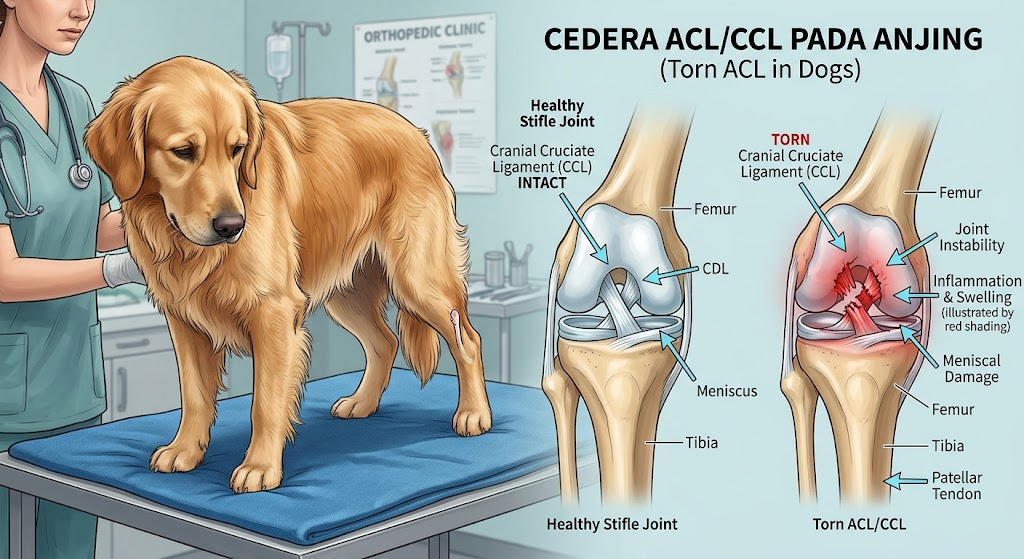
A torn ACL in dogs usually shows up as sudden limping on a back leg, a leg that is held up or only touches the ground with the toes, and difficulty sitting or getting up. In dogs the ligament is technically called the cranial cruciate ligament, or CCL, but most people and many vets call it the ACL. It is one of the most common causes of hind leg lameness, and it rarely heals well on its own.
Most articles list symptoms and then jump to surgery. This guide adds a Knee Clue Check you can do at home, a clear look at ACL tear vs sprain, a week by week Recovery Roadmap, and a Home Setup Checklist so your house is ready before your dog comes home from surgery.
This article is general education and does not replace advice from your veterinarian. Only an exam can confirm a torn ACL, and your surgeon’s instructions always come first.
The Quick Answer
- Signs: Sudden or worsening limping on a back leg, toe touching, stiffness after rest, swelling at the knee, and a leg kicked out to the side when sitting.
- Cause: Usually gradual weakening of the ligament over time, often with a sudden twist or jump finishing the tear.
- Diagnosis: A vet exam of the knee, often with sedation and x rays.
- Treatment: Surgery is the most common recommendation, especially for larger dogs. Non surgical care is sometimes used for small dogs or when surgery is not possible.
- Do not wait: Delay can lead to more joint damage, arthritis, and a higher chance of a meniscus injury.
What Is a Torn ACL in Dogs?
The cruciate ligament sits inside the knee and keeps the shinbone steady under the thighbone. When it tears, the knee becomes unstable, and every step shifts the joint in a way it was not designed for. That causes pain, swelling, and over time, arthritis.
Many dogs do not tear the ligament in one dramatic moment. Instead the ligament weakens slowly, then partially tears, then fully tears. That is why some dogs have a mild limp that comes and goes for weeks before a sudden worsening.
Signs of a Torn ACL in Dogs
- Limping on a back leg, sudden or gradual
- Toe touching, where your dog barely rests the foot on the ground
- Holding the leg up and not using it at all
- Sitting with the leg kicked out to the side instead of tucked under
- Stiffness after rest, especially after lying down or in the morning
- Trouble jumping, climbing stairs, or getting into the car
- Swelling on the inside of the knee
- Muscle loss in the thigh of the affected leg
- Less playing and activity
- A clicking sound when walking, which can point to a meniscus injury
You may notice only one or two of these at first.
Knee Clue Check: A Quick Look at Home
This is not a diagnosis. It helps you give your vet clear information.
- Watch your dog walk on a flat surface, from the side and from behind. Which leg is being favored?
- Watch your dog sit. A leg that sticks out to the side is a common clue.
- Watch your dog stand up after lying down. Is it slow, stiff, or awkward?
- Look at the legs from behind. Compare the thigh muscles. Is one thinner?
- Feel the knees gently if your dog allows it. Is one swollen or warm? Stop if your dog is in pain or tries to bite.
- Take a short video of walking, sitting, and standing. It is more useful than any description.
If your dog yelps, will not put any weight on the leg, or the leg looks deformed, go to a vet or emergency clinic.
ACL Tear vs Sprain: How to Tell the Difference
Owners often ask whether the limp is a sprain that will pass. Here is the general difference, but only an exam can tell them apart.
Sprain or minor strain:
- Often follows a clear event, such as rough play
- Limp improves within a few days of rest
- Little or no swelling at the knee
- Dog uses the leg more each day
Torn ACL:
- May follow an event, or come on gradually
- Limp lasts more than a few days or keeps returning
- Knee swelling or thickening
- Leg kicked out when sitting, or toe touching
- Stiffness after rest, with slow improvement as the dog warms up
Because a partial tear can look like a sprain at first, book a vet visit if a back leg limp lasts more than a few days or comes back.
Other Causes of Back Leg Limping
Not every back leg limp is an ACL tear. Your vet may also check for:
- Kneecap problems (patellar luxation)
- Hip dysplasia
- Arthritis (see our guide to dog arthritis and cold weather)
- Back or nerve problems
- Torn nails, paw injuries, or something stuck in the paw
- Bone or joint infections, or tumors in rare cases
What Causes a Torn ACL in Dogs?
- Gradual ligament weakening with age, which is the most common cause
- Excess weight, which puts more strain on the knees. Check your dog’s condition with our dog weight and body condition score checker.
- Breed and body shape. Large and heavy breeds such as Labrador Retrievers, Rottweilers, Newfoundlands, Golden Retrievers, Mastiffs, Boxers, and Saint Bernards are often affected, and some small breeds too
- Sudden twisting or jumping, such as chasing a ball or slipping on a smooth floor
- Poor muscle condition and lack of regular exercise, followed by a burst of activity (weekend warrior dogs)
- Age and joint disease
- Genetics
Research also suggests that the timing of spay or neuter may play a role in some large breeds. Talk with your vet about the best timing for your dog, and see our dog neuter cost guide for planning.
Many dogs that tear one ACL later injure the other knee, so protecting the second leg is part of the plan.
How Vets Diagnose a Torn ACL
- Physical exam: The vet checks for pain, swelling, and an abnormal forward movement of the shinbone (often called a drawer or thrust test).
- Sedation: Many dogs tense up when sore, so a short sedation may be used for an accurate exam.
- X rays: These show swelling, arthritis, and rule out other problems. A torn ligament itself does not show on a regular x ray.
- Other imaging: Sometimes advanced imaging or joint fluid tests are used.
Your vet will also check for a meniscus injury, which often goes with an ACL tear and can cause more pain.
Treatment Options for a Torn ACL in Dogs
Surgery (Most Common Recommendation)
Surgery stabilizes the knee so the joint stops shifting. Common types include:
- TPLO (tibial plateau leveling osteotomy): The top of the shinbone is cut and rotated to change the angle of the joint. Often recommended for larger and active dogs.
- TTA (tibial tuberosity advancement): Another bone cutting procedure that changes how forces act on the knee.
- Lateral suture or extracapsular repair: A strong stitch outside the joint mimics the ligament. Often used in smaller dogs, and sometimes in larger dogs by some surgeons.
Which one is best depends on your dog’s size, age, activity, knee shape, and your surgeon’s experience. Ask which procedure they recommend and why.
Non Surgical Management
Some small or older dogs, or dogs that cannot have anesthesia, can be managed without surgery. This usually includes strict rest for several weeks, weight loss if needed, controlled exercise, physical therapy, pain control prescribed by your vet, and sometimes a custom knee brace. Healing is slower, the knee often stays unstable, and arthritis is likely. Large dogs generally do worse without surgery, so discuss the options openly with your vet.
Pain Control and Support
Your vet may prescribe pain and anti inflammatory medicine, and may suggest joint supplements or other therapies. Never give human pain relievers such as ibuprofen or naproxen, which can be dangerous for dogs.
Recovery Roadmap After ACL Surgery
This is a general timeline. Your surgeon’s plan comes first, and every dog is different.
Weeks 0 to 2: Strict Rest
- Crate or small room confinement
- Leash only for short bathroom trips
- No running, jumping, stairs, or furniture
- Pain control and incision care as directed
- Prevent licking with a cone or recovery suit
Weeks 2 to 6: Gentle Walks
- Short, slow leash walks, gradually longer as directed
- Continued confinement when not walking
- Follow up visit and possible suture removal
- Start rehab exercises if recommended
Weeks 6 to 12: Building Strength
- Longer controlled walks
- Physical therapy such as underwater treadmill or balance work, if recommended
- X rays to check healing, usually around this time
- Still no off leash play or sudden movements
Weeks 12 to 16 and Beyond: Return to Activity
- Slow return to normal activity if your surgeon approves
- Gradual increase in running and play
- Ongoing weight and muscle management
Many dogs take about three to four months to return to normal activity, and some take longer. Muscle in the leg may take months more to rebuild. Track it with our guide to the dog muscle condition score.
Home Setup Checklist Before Surgery
Get this ready before your dog comes home.
- A crate or small room for rest. Use our dog crate size calculator to find the right size so your dog can lie down comfortably but not move around much.
- Non slip surfaces, such as rugs or yoga mats on slick floors
- A ramp or a support harness for the car and steps. Check sizing with our dog harness size calculator.
- A cone or recovery suit to protect the incision
- A calm routine with chews, puzzle feeders, and calm training. Our dog training plan can help you build one
- A plan for help, since dogs on crate rest need frequent bathroom trips
- Written instructions from your surgeon, and the emergency clinic number
Weight Management During Recovery
Extra weight slows healing and strains the other knee. Dogs on crate rest burn fewer calories, so portions often need to shrink. Use our dog calorie calculator as a starting point and ask your vet for a target. If weight loss stalls, read about a dog weight loss plateau.
Protecting the Other Knee and Preventing Reinjury
- Keep your dog lean.
- Build muscle gradually with steady, controlled exercise rather than weekend bursts
- Warm up before play, with a short walk first
- Avoid slippery floors and lots of jumping, especially for at risk breeds
- Use controlled walking. Our dog walking time calculator helps you plan daily exercise, but follow your vet’s limits during recovery
- Keep up with vet checks, especially for seniors (see our senior dog wellness check in)
Cost and Insurance Planning
Costs for a torn ACL vary widely by region, procedure, and clinic. In the United States, surgery often runs several thousand dollars per knee, plus exams, imaging, rehab, and medications. For a ballpark, try our dog vet cost estimator.
Insurance can help, but check the fine print. Many plans do not cover injuries that happen during a waiting period, and some treat the other knee as a pre existing condition after the first tear. Compare options with our dog insurance cost calculator before you need it.
Questions to Ask Your Vet or Surgeon
- Is the ACL fully or partially torn, and is the meniscus involved?
- Which treatment do you recommend for my dog, and why?
- What is your experience with this procedure?
- What does recovery look like week by week?
- What are the risks and the total expected cost?
- What should I do to protect the other knee?
- When should I call you or go to the emergency clinic?
Frequently Asked Questions
What are the signs of a torn ACL in a dog?
Common signs are limping on a back leg, toe touching, holding the leg up, sitting with the leg out to the side, stiffness after rest, and swelling at the knee.
Can a dog walk with a torn ACL?
Some dogs walk with a limp, and some hold the leg up completely. Walking on an unstable knee can cause more damage, so see your vet.
Can a dog’s ACL heal on its own?
Small tears may improve with rest, but the ligament does not usually heal fully. The knee often stays unstable and arthritis develops, so a vet exam is important.
Is it an ACL tear or a sprain?
A sprain usually improves in a few days. A limp that lasts longer, keeps returning, or comes with swelling and a leg kicked out when sitting points toward an ACL tear. Only an exam can tell.
Does my dog need surgery for a torn ACL?
Most vets recommend surgery, especially for larger or active dogs. Small dogs sometimes do well with non surgical care. Your vet can explain the best choice for your dog.
How long does it take a dog to recover from ACL surgery?
Many dogs need about three to four months to return to normal activity, with strict rest at first. Recovery varies by dog and procedure.
How much does dog ACL surgery cost?
In the United States it often costs several thousand dollars per knee, with a wide range depending on the procedure, region, and clinic. Ask for a written estimate that covers follow up care.
Can a dog tear the other ACL after surgery?
Yes. Many dogs that tear one ACL later injure the other. Keeping your dog lean and fit lowers the risk.
What can I give my dog for pain from a torn ACL?
Only medicine prescribed by your vet. Do not give human pain relievers such as ibuprofen or naproxen, which can be harmful.
Can I prevent a torn ACL in my dog?
You cannot prevent every case, but keeping your dog at a healthy weight, building steady fitness, and avoiding sudden bursts of activity on slippery floors can lower the risk.
The Bottom Line
A torn ACL in dogs usually causes limping, toe touching, and a leg kicked out when sitting, and it rarely heals well without treatment. Do the Knee Clue Check, take a short video, and see your vet if a back leg limp lasts more than a few days or keeps returning.
If surgery is recommended, set up your home ahead of time, follow the Recovery Roadmap your surgeon gives you, manage weight carefully, and protect the other knee for the long run.