
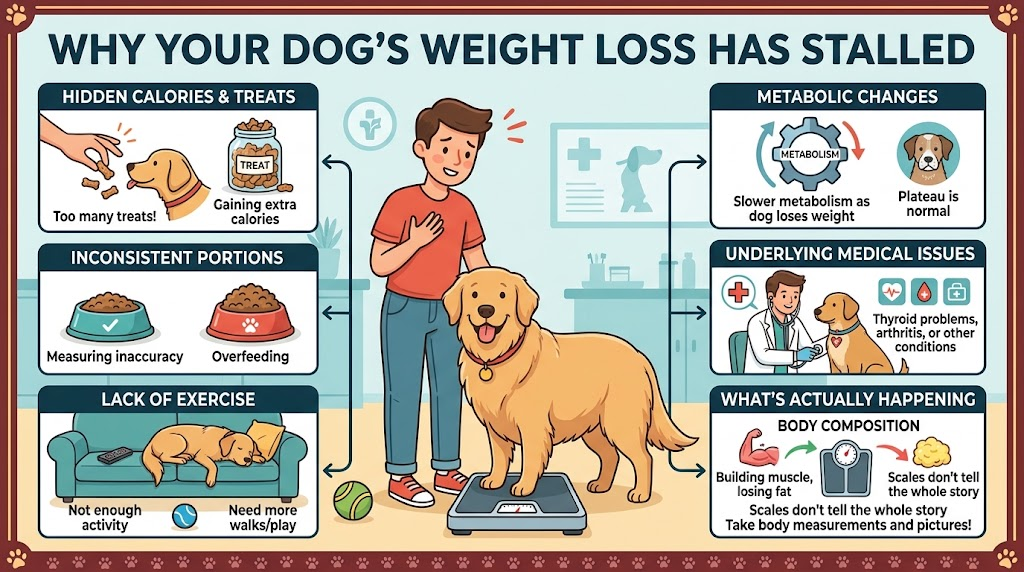
You cut the calories. You measured the food carefully. The first few weeks, the scale moved and the body condition score ticked down a point. Then it just… stopped. Same weight for three weeks straight, despite doing everything the same way that worked before.
Most advice at this point boils down to “check with your vet” or “keep tracking food,” which is true, but doesn’t explain why this happens in the first place. Here’s what’s actually going on in your dog’s body during a weight loss plateau, and what to do about each possible cause.
The First Few Weeks Were Partly Water, Not Fat
If your dog dropped weight quickly in week one or two, some of that initial loss was likely water, not fat. This is the same pattern seen in human weight loss: early changes in diet shift glycogen and fluid balance before fat loss catches up. A slower rate from week three onward isn’t a stall, it’s often the plateau where real fat loss settles into its actual pace, which is naturally slower than the initial drop.
This matters because a lot of owners panic at exactly this point, assuming something has gone wrong, when the real issue is just that the rate of loss was never going to continue at the week-one pace.
A Lighter Dog Needs Fewer Calories to Maintain the Same Deficit
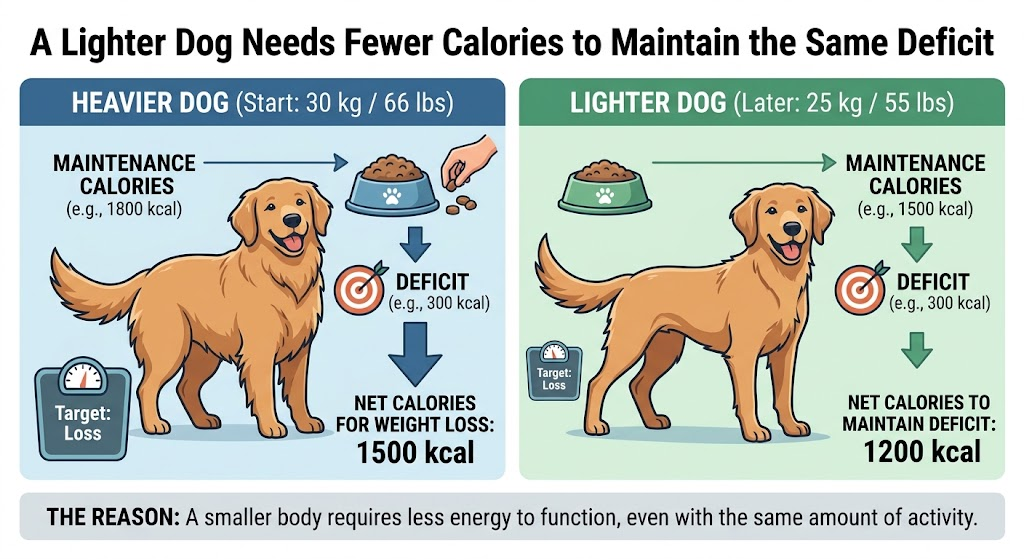
This is the mechanism most explanations skip entirely. Daily energy needs are calculated from current body weight. As your dog loses weight, their Resting Energy Requirement drops too, meaning the exact same calorie amount that created a deficit at their starting weight may now be close to their new maintenance level.
In practical terms: the portion that was working at 30 lbs may no longer be a deficit once your dog reaches 27 lbs. This isn’t a failure of the plan, it’s a predictable consequence of the plan working. The fix is to recalculate calorie needs periodically during a weight loss program rather than setting one number at the start and leaving it unchanged for months.
Treats and “Extras” Creep Back In
This is less about dishonesty and more about how gradual these things are. A training treat here, a bite of something from the kitchen there, a slightly more generous scoop because the bag said “approximately” a cup. None of these feel significant in the moment, but they can erode a calorie deficit without anyone noticing it happening.
A simple way to catch this: write down literally everything your dog eats for one full week, including treats, training rewards, and anything used to hide medication. Most owners are surprised by what the list adds up to once it’s all in one place.
Measuring Drift
Scoops and “cups” of kibble vary more than people expect, especially if the scoop that came with the bag has been swapped for a different cup somewhere along the way, or if the food itself has a different density than what the feeding guide assumed. A kitchen scale, weighing food in grams rather than volume, removes this variable entirely and is considerably more precise than any scoop.
Activity Levels Change Without You Noticing
If a dog’s exercise routine has quietly gotten shorter or less intense, whether from weather, a busy schedule, or a dog simply slowing down a bit, the calorie math that worked a month ago may no longer create the same deficit. This is worth a honest look before assuming the diet itself has failed.
When It’s Actually a Medical Issue, Not a Diet Issue
If calorie intake and activity have genuinely stayed consistent and weight still won’t move, it’s worth ruling out a medical cause with your vet rather than cutting calories further. Two conditions commonly associated with stalled or resistant weight loss in dogs:
- Hypothyroidism. A slowed metabolism that can make weight loss far more difficult than the numbers would predict, often alongside other signs like a dull coat or low energy.
- Cushing’s disease. Can cause weight gain and a pot-bellied appearance even with normal or reduced food intake, usually alongside increased thirst and urination.
These aren’t the most likely explanation in most cases, but they’re common enough that a vet visit is a reasonable step after a few weeks of a genuine, well-tracked plateau, rather than months of guessing at home.
What To Actually Do About a Plateau
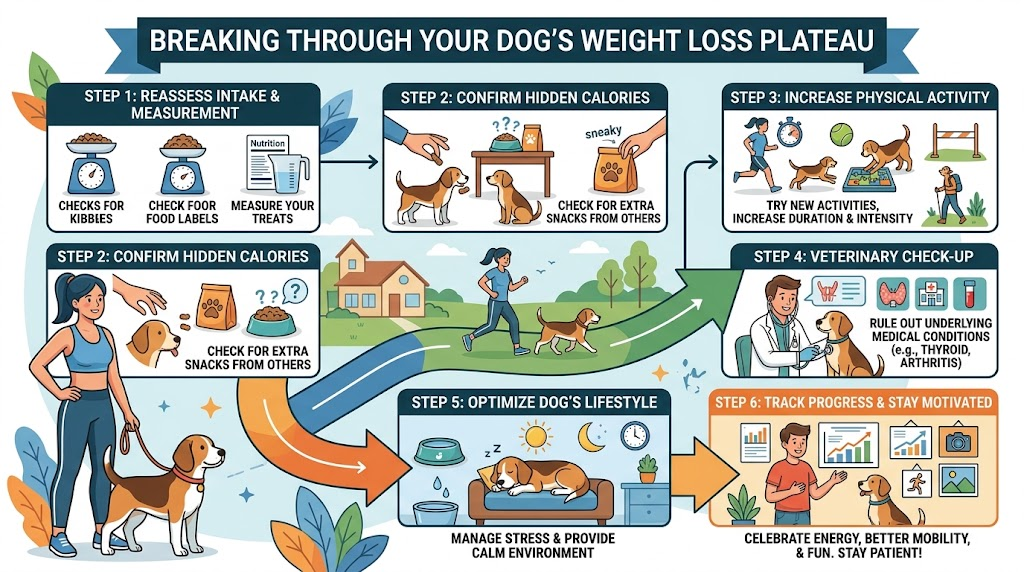
- Confirm it’s been at least 3-4 weeks, not just a slow week. Weight naturally fluctuates day to day, and a single flat weigh-in doesn’t necessarily mean a true plateau.
- Track every bite for one week, including treats and training rewards, before changing anything else.
- Switch to weighing food in grams if you’ve been using a scoop or cup, and recheck the feeding guide against your dog’s current weight, not their starting weight.
- Recalculate calorie needs based on current weight rather than the number set at the start of the program.
- Review activity levels honestly over the past few weeks compared to when the plan started.
- If all of the above checks out and weight still isn’t moving, bring it up with your vet rather than cutting calories further on your own, since further restriction without knowing the cause can risk nutrient deficiencies.
Frequently Asked Questions
Why did my dog lose weight fast at first and then stop? Early weight loss often includes water and glycogen shifts in addition to fat, which drop quickly once a new diet starts. The slower rate that follows is usually the more accurate reflection of actual fat loss, not a sign that something has gone wrong.
How long should I wait before calling a plateau an actual problem? Give it at least 3-4 weeks of consistent tracking before concluding that something beyond normal pacing is going on. Shorter stretches of flat weight are common and don’t necessarily mean the plan has stopped working.
Should I just cut more calories if weight isn’t moving? Not as a first step. Recalculating based on current weight, tightening up measuring and treats, and ruling out a medical cause should come before restricting calories further, since cutting too aggressively can risk muscle loss and nutrient deficiencies.
Can my dog’s weight loss plan need adjusting even if nothing seems different? Yes. As a dog loses weight, their calorie needs decrease along with it, so a portion that created a deficit at the starting weight can quietly become close to maintenance a few months in, even if nothing about the routine has visibly changed.
What medical conditions can cause a weight loss stall? Hypothyroidism and Cushing’s disease are the two most commonly associated with resistant weight gain or stalled weight loss in dogs. Both usually come with other signs beyond weight alone, which is part of why a vet visit is useful rather than guessing from weight trends in isolation.
Not sure where your dog’s weight loss should have started from? Our Body Condition Score Checker is a good way to confirm the starting point, and our Dog Calorie Calculator can help you recalculate daily needs based on your dog’s current weight rather than their starting weight. If your dog is also showing signs of muscle loss alongside a stalled weight change, our guide to skinny fat dogs and muscle condition score covers a related pattern worth ruling out.