
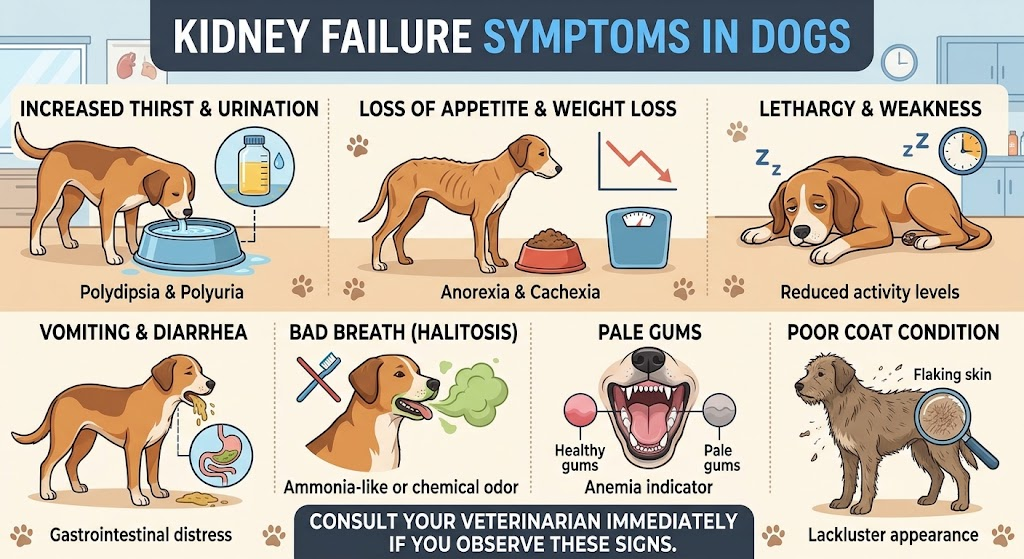
Kidney failure symptoms in dogs often start quietly. The most common early signs are drinking and urinating more than usual, losing weight, eating less, and having low energy. Later signs include repeated vomiting, bad breath that smells like urine, mouth sores, weakness, and in serious cases, collapse or seizures. Because the early signs are easy to miss, knowing what to look for can make a real difference.
Most articles give you a long list of symptoms with no sense of order. This guide organizes them into a Kidney Symptom Timeline (early, middle, and late), gives you an Early Warning Scorecard to take to your vet, and explains the silent stage, when the kidneys are already struggling but your dog looks fine.
This article is general education and does not replace advice from your veterinarian. Kidney problems need blood and urine tests to confirm, and many other conditions look similar.
The Quick Answer
- Early signs: Increased thirst and urination, weight loss, reduced appetite, and tiredness.
- Later signs: Vomiting, diarrhea, bad breath that smells like urine or ammonia, mouth ulcers, pale gums, weakness, and a dull coat.
- Emergency signs: No urination, collapse, seizures, severe vomiting, or exposure to antifreeze, grapes, or raisins.
- Diagnosis: Blood tests, a urine test, and often a blood pressure check at your vet.
- Key point: Many dogs show no clear signs until a lot of kidney function is already lost, so regular screening matters, especially for senior dogs.
What Do a Dog’s Kidneys Do?
The kidneys filter waste from the blood, balance fluids and minerals, help control blood pressure, and make a hormone that supports red blood cells. When they stop working well, waste products build up in the body, and dogs begin to feel sick.
Kidney failure comes in two main forms.
- Acute kidney injury happens suddenly, over hours or days, often because of a toxin, infection, severe dehydration, or lack of blood flow. It can be an emergency, and some dogs recover if treated quickly.
- Chronic kidney disease develops slowly over months or years. It is common in older dogs and cannot be cured, but it can often be managed, and many dogs live comfortably for a time with good care.
The Silent Stage: Why Early Kidney Disease Is Easy to Miss
Dogs can lose a large portion of their kidney function before standard blood tests show a change, and well before outward signs appear. During this time your dog may eat, play, and act normal. That is why vets recommend regular bloodwork and urine tests for seniors and dogs at higher risk.
Newer blood tests can sometimes pick up changes earlier than older ones, so ask your vet which tests are included in your dog’s routine screening.
Kidney Symptom Timeline
Use this as a general guide. Not every dog follows the same order, and symptoms can overlap.
Early Signs
- Drinking more water than usual
- Urinating more, having accidents in the house, or needing to go out at night
- Weight loss or loss of muscle, even with a normal appetite at first
- Slightly lower energy
- Dilute, pale, or less smelly urine
If you are not sure whether your dog is drinking too much, check the baseline with our dog water intake calculator.
Middle Signs
- Reduced appetite or pickiness
- Vomiting, sometimes with nausea signs like drooling and lip licking (see our guide to dog throwing up and diarrhea)
- Diarrhea or constipation
- Bad breath that smells like urine or ammonia (see our dog breath smells like poop smell decoder)
- Pale gums
- Dull, dry coat
- Noticeable weight and muscle loss (track it with our dog weight and body condition score checker and read about the dog muscle condition score)
Late and Serious Signs
- Mouth ulcers or sores, with drooling
- Frequent vomiting and refusing food
- Marked weakness or lethargy
- Little or no urine
- Sudden blindness or confusion, sometimes linked to high blood pressure
- Tremors or seizures
- Collapse
Late signs mean your dog needs a vet right away.
Early Warning Scorecard
Go through this list and count how many apply. Bring it to your vet.
- My dog is drinking much more than before.
- My dog is urinating more, or has accidents.
- My dog has lost weight or muscle.
- My dog eats less or is pickier.
- My dog is more tired than usual.
- My dog has vomited more than once recently.
- My dog’s breath smells like urine or ammonia.
- My dog’s gums look pale or has mouth sores.
- My dog is older than seven, or is a breed at higher risk.
One or two checks: Mention them at your next vet visit and ask about screening.
Three or more checks: Book a vet appointment this week and ask about blood and urine tests.
Any late or emergency sign: Go to a vet or emergency clinic now.
Other Conditions That Look Like Kidney Disease
Drinking and urinating more is not always the kidneys. Your vet will rule out other causes, including:
- Diabetes
- Urinary tract infection or bladder stones
- Cushing’s disease
- Liver disease
- Infection of the uterus in unspayed females
- Certain medications
This is another reason not to guess. Testing is the only way to know.
What Causes Kidney Failure in Dogs?
Causes of Acute Kidney Injury
- Antifreeze (ethylene glycol). This is an emergency. It tastes sweet, and even small amounts can be fatal. Call a vet or poison hotline immediately.
- Grapes, raisins, and currants. Some dogs develop kidney failure after eating them. Use our dog chocolate and raisin toxicity calculator and our dog toxic food checker, and call your vet right away if your dog ate any.
- Human pain relievers such as ibuprofen and naproxen, and some prescription drugs.
- Leptospirosis, a bacterial infection spread through contaminated water and wildlife urine. Ask your vet whether the vaccine fits your dog, and see our puppy shots schedule for routine vaccines.
- Severe dehydration or heatstroke. Check your risk with our dog heatstroke risk calculator.
- Blockage of urine flow, or other serious illness that reduces blood flow to the kidneys.
Causes and Risk Factors for Chronic Kidney Disease
- Age. Risk rises as dogs get older.
- Breed. Some breeds are more prone to inherited kidney problems, including Cairn Terriers, Samoyeds, Bull Terriers, English Cocker Spaniels, Shar Peis, and Doberman Pinschers.
- Past kidney injury or repeated infections
- High blood pressure
- Dental disease, which may be linked to kidney strain over time
- Long term use of certain medications
- Unknown causes, which is common
Young dogs can also be born with kidney problems, so unusual thirst or poor growth in a puppy deserves a vet visit.
Emergency: When to Go to the Vet Right Now
- Your dog ate or may have licked antifreeze
- Your dog ate grapes, raisins, or currants
- Your dog is not urinating or only passing a few drops
- Repeated vomiting with weakness or collapse
- Seizures or tremors
- Sudden blindness, confusion, or severe lethargy
- Pale or white gums
If you suspect poisoning, call an animal poison control hotline or your vet immediately and do not wait for symptoms.
How Vets Diagnose Kidney Disease
- Blood tests measuring kidney markers, such as creatinine, BUN, and SDMA, along with phosphorus and other minerals
- Urine test, including how concentrated the urine is, and whether it contains protein or blood
- Blood pressure check
- Ultrasound or x rays when needed
- Tests for infection such as leptospirosis, depending on the situation
Vets often classify chronic kidney disease into stages using these results. The stage helps decide treatment and how often to recheck.
How Kidney Disease Is Managed (Overview)
Treatment depends on whether it is acute or chronic, and how advanced it is. Your vet may recommend:
- IV or under the skin fluids to support hydration
- A kidney friendly diet, often with restricted phosphorus (read our guide to low phosphorus dog food, and do not switch diets until your vet has tested your dog)
- Medicines for nausea, appetite, blood pressure, or phosphorus control
- Treatment for the underlying cause, such as infection
- Regular rechecks of blood and urine
Dogs with chronic kidney disease cannot be cured, but with early detection and steady care many do well for a good while. How long depends on the stage, the cause, and how your dog responds, and your vet is the best guide.
What You Can Do at Home
- Keep fresh water available at all times. Do not restrict water.
- Keep a simple log of drinking, urination, appetite, vomiting, and weight each week.
- Weigh your dog monthly and note any loss.
- Do not change food or give supplements without asking your vet.
- Never give human pain relievers.
- Keep toxins out of reach, including antifreeze, grapes, raisins, and medications.
- Keep up with dental care, since mouth disease can add to problems.
Questions to Ask Your Vet
- Which tests do you recommend for my dog’s age and risk?
- What stage is my dog’s kidney disease, if any?
- Does my dog need a special diet, and which one?
- How often should we recheck bloodwork and urine?
- Which symptoms mean I should call right away?
- Are any of my dog’s current medicines a concern for the kidneys?
Screening and Prevention
You cannot prevent every kidney problem, but you can lower the risk and catch trouble early.
- Screen seniors regularly. Many vets suggest yearly bloodwork and urine tests for older dogs, and sometimes more often. Use our senior dog wellness check in to organize what you have noticed before the visit.
- Secure toxins such as antifreeze, grapes, and raisins.
- Avoid human medications for pets unless your vet directs you.
- Keep up with dental care and vaccines your vet recommends.
- Protect against dehydration in hot weather.
- Report changes early, such as more thirst or weight loss.
Cost and Planning
Testing and long term management can add up. For a ballpark, see our dog vet cost estimator, and compare coverage with the dog insurance cost calculator before a diagnosis, since conditions found later are often excluded.
Frequently Asked Questions
What are the first signs of kidney failure in dogs?
The earliest signs are usually drinking and urinating more, losing weight, eating less, and having lower energy. Many dogs show no signs at first.
How do I know if my dog’s kidneys are failing?
Only tests can confirm it. Signs such as more thirst, vomiting, weight loss, urine smelling breath, pale gums, and weakness are reasons to see your vet and ask for blood and urine testing.
What does a dog look like when its kidneys are failing?
A dog may seem thin and tired, drink and urinate a lot, refuse food, vomit, have a dull coat, bad breath, and mouth sores. In late stages, dogs can become weak, confused, or collapse.
What is the difference between acute and chronic kidney failure in dogs?
Acute kidney injury happens suddenly, often from a toxin or infection, and can be an emergency. Chronic kidney disease develops slowly over time and is managed rather than cured.
Can a dog recover from kidney failure?
Some dogs recover from acute kidney injury if treated quickly. Chronic kidney disease is not curable but can often be managed, and many dogs have a good quality of life with proper care.
Does drinking a lot of water always mean kidney disease?
No. Diabetes, infections, Cushing’s disease, and other conditions can also cause increased thirst. Your vet will run tests to find the cause.
Can kidney failure in dogs cause bad breath?
Yes. Waste buildup can give the breath a urine or ammonia smell, and mouth ulcers can add to it. See your vet if you notice this with other signs.
What foods cause kidney failure in dogs?
Grapes, raisins, and currants can cause kidney failure in some dogs. Antifreeze is also a major danger, though it is not a food. Always call your vet right away if your dog ate any of these.
How often should senior dogs be tested for kidney disease?
Many vets recommend yearly bloodwork and urine testing for senior dogs, and sometimes more often for dogs at higher risk. Ask your vet for a schedule that fits your dog.
The Bottom Line
Kidney failure symptoms in dogs usually begin with more thirst, more urination, weight loss, and lower energy, then progress to vomiting, bad breath, and weakness. Because the early stage is silent, regular screening and quick attention to small changes matter most.
Use the Kidney Symptom Timeline and the Early Warning Scorecard, keep a simple log, and call your vet if you notice a pattern. Treat antifreeze, grapes, and raisins as emergencies.