
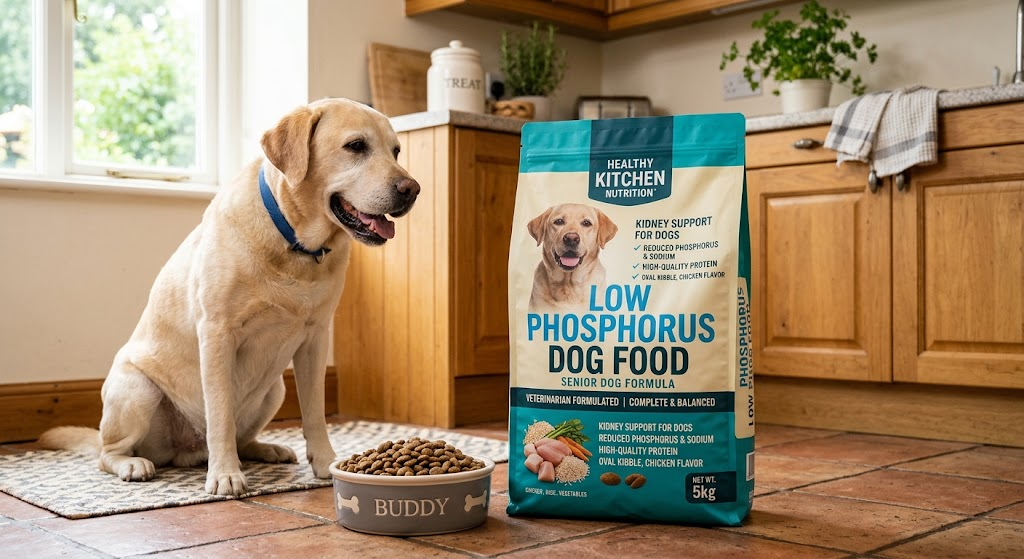
Low phosphorus dog food is mainly used for dogs with chronic kidney disease, because damaged kidneys cannot clear phosphorus well and too much of it can speed up further kidney damage. For a healthy dog, though, a low phosphorus diet is not needed and can even be harmful, since dogs and especially puppies need phosphorus for bones and energy. The right food depends on bloodwork and your vet’s plan, not on guessing.
Most articles give you a list of brands and stop. This guide teaches you how to read a dog food label like a vet nutritionist, including a simple Dry Matter Label Math method that stops canned and dry foods from fooling you, plus a clear list of kidney friendly treats and ones to avoid.
This article is general education and does not replace advice from your veterinarian. Do not start a low phosphorus or kidney diet without veterinary testing and guidance.
The Quick Answer
- Who needs it: Dogs diagnosed with chronic kidney disease, usually when your vet sees high or rising phosphorus or kidney markers on bloodwork.
- Who does not: Healthy adult dogs, puppies, pregnant or nursing dogs. They need normal phosphorus levels.
- Best option: A veterinary prescription renal diet, unless your vet recommends otherwise.
- Label trick: Compare foods on a dry matter basis, not the numbers on the front of the bag or can.
- Treats: Choose low phosphorus options such as certain fruits and vegetables, and avoid cheese, jerky, bones, and processed snacks.
What Is Phosphorus and Why Do Vets Limit It?
Phosphorus is a mineral that dogs need for strong bones, energy, and cell function. Healthy kidneys remove the extra. When the kidneys are damaged, phosphorus builds up in the blood, which can make kidney disease progress faster and make dogs feel sicker. Limiting phosphorus in the diet is one of the main tools vets use to slow that process.
A low phosphorus diet is usually part of a bigger plan. Your vet may also adjust protein, sodium, and fluids, and sometimes add medicine that helps bind phosphorus. This is why the diet needs to match your dog’s stage of disease.
Does Your Dog Need a Low Phosphorus Diet?
Probably yes, if your vet has said so, based on bloodwork such as phosphorus, creatinine, SDMA, and urine tests.
Probably no if your dog is healthy, young, growing, pregnant, or nursing, or has not had kidney testing.
See your vet for testing if your dog shows signs such as:
- Drinking and urinating much more than usual
- Weight loss or muscle loss
- Poor appetite or nausea
- Vomiting
- Bad breath or mouth sores
- Low energy
These signs can come from many conditions, so do not assume it is the kidneys. For senior dogs, regular screening is wise. Use our senior dog wellness check in to organize what you have noticed before the visit.
Dry Matter Label Math: How to Compare Foods Fairly
Here is the problem. A bag of dry food has about 10% moisture. A can of wet food has about 75% to 80% moisture. The phosphorus number on the label is “as fed,” meaning it includes all that water. So a canned food can look much lower in phosphorus than a dry food when it really is not.
To compare fairly, convert both to dry matter.
Formula: Phosphorus on a dry matter basis = phosphorus as fed ÷ (100 minus moisture %) × 100
Worked Example
- Dry food: phosphorus 0.9% as fed, moisture 10%. Dry matter phosphorus is 0.9 ÷ 90 × 100 = 1.0%.
- Canned food: phosphorus 0.12% as fed, moisture 78%. Dry matter phosphorus is 0.12 ÷ 22 × 100 = about 0.55%.
On the label, 0.9% versus 0.12% looks like a huge difference. On a dry matter basis it is 1.0% versus about 0.55%, which is a much smaller gap.
What Numbers to Look For
- The minimum phosphorus level for adult dog maintenance food is 0.5% on a dry matter basis.
- Veterinary renal diets are often in the range of roughly 0.2% to 0.5% on a dry matter basis, but your vet sets the target for your dog.
- Many regular and senior foods are well above that range and are not low phosphorus, even when the label says “senior” or “kidney support.”
Phosphorus is not always printed on the bag. If it is missing, contact the company and ask for the full nutrient analysis, including phosphorus on a dry matter basis.
Hidden Phosphorus: What to Watch For in Ingredients
- Phosphate additives, such as phosphoric acid, sodium tripolyphosphate, and other phosphates. These are absorbed very easily.
- Bone meal and meat and bone meal, which are high in phosphorus
- Organ meats and fish eaten with bones
- Dairy, such as cheese and milk products
- Egg yolk, which is higher in phosphorus than egg white
- Grains and seeds in some formulas
A label that says “no artificial preservatives” does not mean low phosphorus. Always check the numbers.
Prescription vs Over the Counter vs Homemade
Prescription Renal Diets
These are formulated and tested for dogs with kidney disease. They control phosphorus carefully and adjust other nutrients, and they are usually the best choice when your vet recommends diet therapy. They are sold through vets or with a vet’s authorization.
Over the Counter Foods Marketed as Low Phosphorus
Some are lower than average, but many are not low enough for a dog with kidney disease. Compare them using dry matter math and ask your vet before switching.
Homemade Diets
Homemade renal diets are hard to balance. Too little protein or the wrong mineral balance can cause new problems. If you want to cook for your dog, work with a veterinary nutritionist rather than a recipe from the internet.
Kidney Friendly Treats: What to Give and What to Skip
Treats can quietly add a lot of phosphorus, protein, and sodium. Ask your vet which are right for your dog’s stage, because some dogs also need limits on sugar, potassium, or calories.
Often Fine in Small Amounts (Ask Your Vet First)
- Apple slices, with no core or seeds
- Blueberries
- Cucumber slices
- Green beans, plain and cooked or raw
- Carrot pieces
- Seedless watermelon, in small pieces
- Strawberries, in small pieces
- Plain air popped popcorn, with no salt or butter
Usually Best to Avoid
- Cheese and dairy treats
- Jerky and most meat based treats
- Bones, bone chews, and bone meal
- Organ meat treats
- Nut butters, which are often higher in phosphorus and fat
- Processed human snacks and anything with phosphate additives
- Salty foods
- Egg yolks
A cooked egg white is lower in phosphorus than a whole egg, which is why some renal plans use it. Never feed it raw. See our guide on whether dogs can eat raw eggs for the safety details.
Always keep fruit portions small and count them toward your dog’s daily calories. Use our dog calorie calculator and keep treats to about 10% of daily calories. Check any food you are not sure about with our dog toxic food checker, and remember that grapes and raisins are never safe.
Switching to a Low Phosphorus Diet Without a Food Fight
Dogs with kidney disease often have poor appetite, and a diet change can make it harder.
- Switch gradually over about seven to ten days, mixing the new food into the old.
- Warm the food slightly to bring out the smell.
- Offer small, frequent meals instead of two large ones.
- Try different textures, such as wet, dry, or a mix, if your vet approves.
- Call your vet if your dog refuses food. Poor appetite can be treated, and your dog should not go long without eating.
If your dog still loses weight on the new diet, check the body condition and muscle with our dog weight and body condition score checker and read about the dog muscle condition score, since muscle loss is common in kidney disease.
Hydration Matters Too
Dogs with kidney disease need plenty of water, and wet food adds extra moisture. Ask your vet whether canned renal food or mixing in water fits your dog. Use our dog water intake calculator to get a baseline for normal drinking, and use the wet food portion calculator to work out how much canned food to serve.
Monitoring, Cost, and Long Term Planning
Your vet will recheck bloodwork periodically to see whether the diet is working and adjust the plan. Prescription diets and testing can cost more than regular food, so plan ahead. For a rough view of ongoing vet costs, try our dog vet cost estimator, and compare the full picture with the cost of owning a dog calculator.
Frequently Asked Questions
What is low phosphorus dog food?
It is a diet with restricted phosphorus, most often used for dogs with chronic kidney disease to reduce the load on the kidneys.
Do healthy dogs need low phosphorus food?
No. Healthy dogs need normal phosphorus levels, and puppies need even more. Restricting it without a medical reason can cause problems.
How much phosphorus should a dog have?
Adult maintenance dog foods need at least 0.5% phosphorus on a dry matter basis. Dogs with kidney disease may need much lower levels set by their vet.
What is the best low phosphorus dog food?
The best choice depends on your dog’s stage of kidney disease, appetite, and other conditions. Many vets recommend a prescription renal diet, so ask your vet which fits your dog.
What are good low protein treats for dogs with kidney disease?
Small amounts of certain fruits and vegetables, such as apple slices, blueberries, cucumber, and green beans, are often used. Ask your vet first, because needs vary.
Can I make homemade low phosphorus dog food?
It is possible, but hard to balance. Work with a veterinary nutritionist so the diet is complete and safe.
Is canned food lower in phosphorus than dry food?
Not always. Canned food looks lower on the label because of its water content. Compare on a dry matter basis to see the real difference.
Are senior dog foods low in phosphorus?
Not necessarily. Many senior foods are not low enough for kidney disease. Check the dry matter numbers and ask your vet.
Does low phosphorus food cure kidney disease?
No. It can help slow progression and improve how a dog feels, but it is part of a larger treatment plan guided by your vet.