
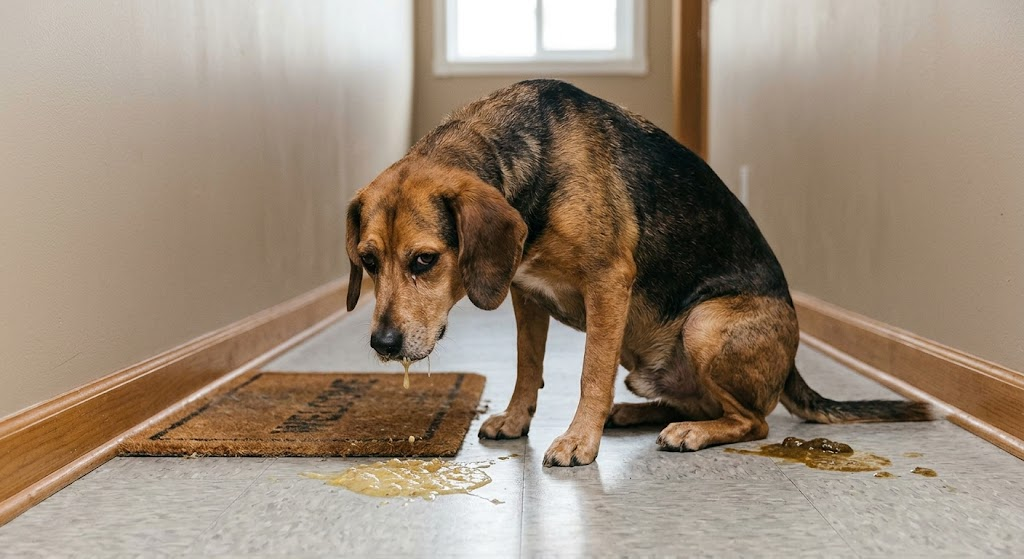
If your dog is throwing up and has diarrhea, the cause is often a mild stomach upset that settles within a day. But the same two symptoms together can also point to something serious, and the difference usually comes down to your dog’s age, how often it is happening, and what else you notice. This guide gives you a clear way to decide what to do right now.
Most articles list causes and tell you to “call your vet if it gets worse.” This one adds three practical tools: a Vet Call Traffic Light that sorts your situation into green, yellow, or red, a Symptom Log of what to write down before you call, and a home hydration check you can do in 30 seconds.
This article is general education and does not replace advice from your veterinarian. If you are worried, call your vet or an emergency clinic.
The Quick Answer
- A single episode in a healthy adult dog who is still bright, drinking, and acting normal can often be watched at home for a day.
- Puppies, small dogs, senior dogs, and dogs with health conditions should be seen sooner, because they dehydrate quickly.
- Blood, black stool, a swollen belly, constant retching, weakness, or possible poisoning means call a vet or emergency clinic right away.
- Never give human medications such as ibuprofen, naproxen, or acetaminophen. Do not give any medication unless your vet tells you to.
Vomiting vs Regurgitation: Make Sure You Know Which One It Is
These look similar but mean different things, and your vet will want to know which one you saw.
- Vomiting is active. Your dog drools, licks its lips, heaves, and its belly contracts. The material is usually partly digested and may smell sour.
- Regurgitation is passive. Food comes up easily with no heaving, often soon after eating, and it can look like a tube shape of undigested food.
If your dog is regurgitating rather than vomiting, mention that to your vet. It points to a different set of causes, mostly involving the esophagus.
Vet Call Traffic Light
Use this as a general guide. When in doubt, call your vet.
Green: Watch at Home and Check In
All of these are true:
- Healthy adult dog, not a puppy or a senior
- One or two episodes of vomiting and a loose stool or two
- Still alert, wagging, and interested in water
- No blood, no known toxin, no swollen belly
- No existing conditions such as diabetes, kidney disease, or pancreatitis
Watch closely and plan to call your vet if things do not improve within 24 hours.
Yellow: Call Your Vet Today
Any of these:
- Vomiting more than two or three times in a few hours
- Diarrhea that lasts more than 24 hours
- Your dog will not eat, or will not drink
- Your dog is a puppy, a toy breed, or a senior
- Your dog has a health condition or takes regular medication
- Mild lethargy, or your dog seems quiet and off
- Your dog recently changed food, ate trash, or got into table scraps
Red: Go to a Vet or Emergency Clinic Now
Any of these:
- Blood in the vomit or stool, or black tarry stool
- A hard, swollen, or painful belly, especially with unproductive retching (this can be bloat, a true emergency, mostly in large deep chested breeds)
- Constant vomiting, or your dog cannot keep water down
- Collapse, severe weakness, pale gums, or trouble breathing
- Known or suspected poisoning, such as chocolate, grapes, xylitol, medications, or plants
- Unvaccinated or partly vaccinated puppy with vomiting and diarrhea (parvovirus is a risk)
- A foreign object may have been swallowed, such as a toy, sock, or corn cob
If you suspect poisoning, call an animal poison control hotline or your vet immediately instead of waiting for symptoms to build.
Symptom Log: What to Write Down Before You Call
Vets make better decisions when you give clear details. Spend two minutes noting these.
- When it started and how many times each symptom has happened
- What it looks like: color, consistency, any blood, mucus, worms, or foreign material
- What your dog ate in the last 48 hours, including treats, scraps, trash, plants, and new food
- Behavior: energy level, appetite, thirst, any pain or restlessness
- Medications and supplements your dog takes, plus vaccine and parasite prevention status
- Any chance of poison or swallowed objects, and anything unusual around the house or yard
Snap a quick photo of the vomit or stool if you can. It can help your vet more than a long description.
30 Second Hydration Check
Vomiting and diarrhea together drain fluids fast. Try these quick checks.
- Gums: Healthy gums feel slick and moist. Tacky or dry gums suggest dehydration.
- Skin: Gently lift the skin over the shoulders and release. It should snap back quickly. Slow return suggests dehydration.
- Eyes and energy: Sunken eyes or unusual weakness are warning signs.
If any of these look off, call your vet promptly. Dehydration can build faster than you expect, especially in small dogs and puppies.
Common Causes of Vomiting and Diarrhea in Dogs
- Dietary indiscretion: Eating garbage, spoiled food, table scraps, or something rich is the most common cause.
- Sudden food change: Switching foods too quickly can upset the gut.
- Rich or fatty foods: These can trigger stomach upset and, in some dogs, pancreatitis.
- Toxins and unsafe foods: Chocolate, grapes and raisins, xylitol, onions, certain plants, and medications can all cause GI signs. Check anything questionable with our dog toxic food checker, and if chocolate or raisins were involved, use the chocolate and raisin toxicity calculator.
- Raw or spoiled foods: Bacteria such as Salmonella can cause trouble. See why in our guide to whether dogs can eat raw eggs.
- Parasites: Worms and protozoa such as giardia are common, especially in puppies.
- Infections: Viruses like parvovirus, and bacterial infections, can be serious.
- Foreign objects: Toys, fabric, bones, and corn cobs can block the gut.
- Food intolerance or allergy: Repeated episodes after certain foods can point to this.
- Stress: Boarding, travel, or changes at home can cause loose stool and an upset stomach.
- Underlying disease: Pancreatitis, kidney or liver disease, and other conditions can cause ongoing symptoms.
Festive foods and decorations bring extra risks in winter, so see whether poinsettias are toxic to dogs if your dog chews plants.
What to Do at Home for a Mild Case (Healthy Adult Dogs Only)
This applies only to the green zone above. If you are not sure, call your vet first.
1. Stay Calm and Remove Temptations
Pick up toys, food, and anything your dog might eat. Move your dog to an easy to clean area.
2. Ask Your Vet About Holding a Meal
For a healthy adult dog, vets sometimes suggest skipping a meal or two to let the stomach settle. This is not safe for everyone. Do not fast puppies, toy breeds, senior dogs, or dogs with diabetes or other conditions unless your vet says so.
3. Offer Small Amounts of Water
Keep fresh water available. If your dog gulps and throws it up, offer small amounts more often instead of a full bowl. If you are unsure about your dog’s usual intake, use our dog water intake calculator to see what is normal.
4. Reintroduce Food Gently
Once vomiting has stopped for several hours and your vet agrees, many vets suggest small, bland meals, such as plain boiled chicken without skin or seasoning with plain white rice. Offer small portions several times a day, then return to normal food gradually over two to three days by mixing it in. If you need help working out the right amount, use the dog calorie calculator.
5. Monitor Closely
Watch energy, thirst, appetite, and stool. If anything moves into the yellow or red zone, call your vet.
What Not to Do
- Do not give human anti diarrhea or anti nausea medicine, or pain relievers, unless your vet directs you to.
- Do not try to make your dog vomit at home unless a vet or poison hotline tells you to.
- Do not feed fatty, dairy, or seasoned foods while your dog recovers.
- Do not wait it out if your dog is a puppy or a senior.
Higher Risk Dogs: Do Not Wait
These dogs can get sick fast, so call your vet early.
- Puppies, especially under six months or not fully vaccinated. Check where your puppy stands with our puppy shots schedule.
- Toy and small breeds, who can drop in blood sugar and dehydrate quickly.
- Senior dogs, who may have hidden kidney, liver, or heart issues.
- Dogs with diabetes, pancreatitis, kidney disease, or Addison’s disease.
- Dogs on regular medication, including steroids or anti inflammatories.
- Dogs that are pregnant or nursing.
What Will the Vet Do?
Your vet will ask about the timeline and diet, then check hydration, belly pain, temperature, and gum color. Depending on the situation, they may recommend a stool test, bloodwork, x rays or ultrasound, fluids, anti nausea medicine, or a prescription diet. Costs vary a lot by region and by how much testing is needed. For a ballpark, try our dog vet cost estimator, and if you are comparing coverage, see the dog insurance cost calculator.
How to Prevent Stomach Upsets
- Switch foods slowly, mixing old and new over about seven to ten days.
- Skip table scraps and rich treats, especially around holidays.
- Secure trash and counters so your dog cannot scavenge.
- Keep up with parasite prevention and vaccines.
- Supervise toys and chews so nothing gets swallowed.
- Track repeat problems. If episodes keep coming back, our dog food sensitivity test can help you organize what you have noticed before you talk to your vet.
Frequently Asked Questions
How long does a dog’s vomiting and diarrhea last?
Mild cases from something they ate often settle within 24 to 48 hours. If it lasts longer, keeps coming back, or your dog seems unwell, call your vet.
Should I take my dog to the vet for vomiting and diarrhea?
Call your vet if your dog is a puppy or a senior, has vomited more than a couple of times, has diarrhea for more than a day, refuses food or water, or shows blood, weakness, or belly pain. Go right away for any red zone sign.
What can I give my dog for an upset stomach?
Do not give human medication. For a healthy adult dog with a mild case, your vet may suggest a short rest from food and then small bland meals. Always check with your vet before giving anything.
Can I give my dog Pepto Bismol, Imodium, or ibuprofen?
Not without veterinary guidance. Some human medicines are unsafe for dogs or can hide serious problems. Ibuprofen and similar pain relievers can be dangerous.
Is it normal for a dog to throw up and have diarrhea after eating something new?
It can be, especially after a sudden food change or table scraps, but it should settle quickly. If it does not, or your dog is a puppy or senior, call your vet.
When is dog vomiting and diarrhea an emergency?
Blood in vomit or stool, black tarry stool, a swollen belly with retching, collapse, constant vomiting, suspected poisoning, or an unvaccinated puppy with these signs are all emergencies.
Can stress cause vomiting and diarrhea in dogs?
Yes. Boarding, travel, and big changes at home can upset a dog’s stomach. Still, rule out other causes if symptoms last more than a day.
Can parvo cause vomiting and diarrhea?
Yes. Parvovirus mostly affects unvaccinated or partly vaccinated puppies and causes severe vomiting, bloody diarrhea, and lethargy. It is an emergency.
The Bottom Line
A dog throwing up and having diarrhea is often a mild upset that passes, but it can turn serious fast, especially in puppies, seniors, and small dogs. Use the traffic light to decide how urgent it is, write down what you see before you call, and check hydration. Skip human medicines, and let your vet guide any treatment.
When in doubt, call. A quick phone call is far cheaper than waiting too long.