
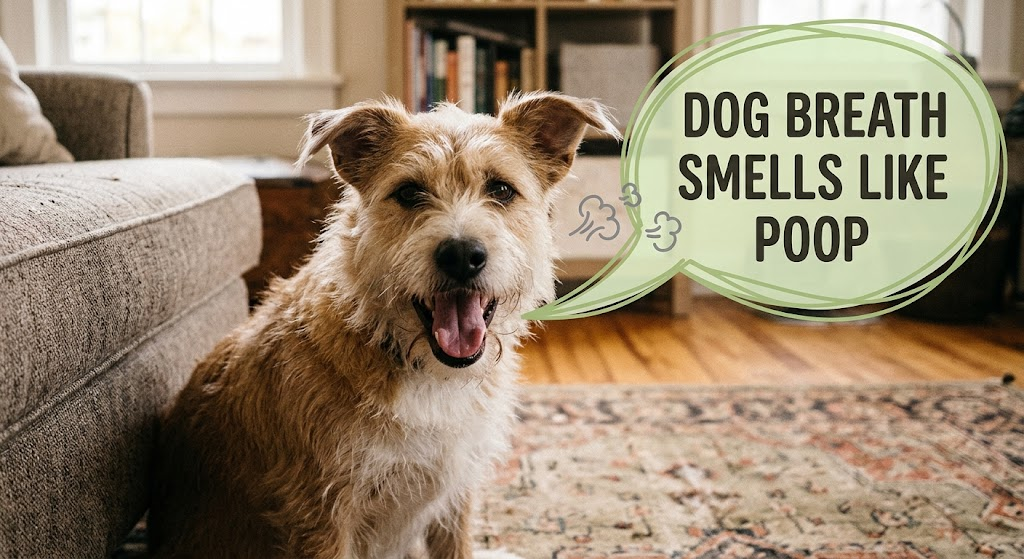
If your dog’s breath smells like poop, the most common cause is dental disease, where bacteria build up on the teeth and gums and give off a strong, rotten smell. But a stool like odor can also mean your dog is eating poop, or that something else is going on in the mouth, stomach, or body. The good news is that most cases have a clear cause and a clear fix.
Most articles list causes and tell you to brush your dog’s teeth. This guide goes further with a Breath Smell Decoder that links different smells (poop, fish, urine, sweet) to likely causes, a Lift the Lip Check you can do in a minute, and a plan for what to do depending on what you find.
This article is general education and does not replace advice from your veterinarian. A mouth exam is the only way to know the cause for sure.
The Quick Answer
- Most common cause: Dental disease, which means plaque, tartar, gum infection, and sometimes rotting teeth.
- Other causes: Eating poop, eating garbage or spoiled food, stomach and intestinal problems, anal gland leakage, and diseases of the kidneys, liver, or blood sugar.
- First step: Look in your dog’s mouth, then book a vet exam if the smell is strong or has appeared suddenly.
- Best long term fix: Daily or regular tooth brushing and professional dental cleanings when your vet recommends them.
- Emergency: Poop smelling breath together with vomiting that smells like feces needs a vet right away, because it can point to a blockage.
Why Does My Dog’s Breath Smell Like Poop?
A healthy dog’s breath is not perfumed, but it should not make you step back. When it smells like poop or feces, it is usually because of one of these.
1. Dental Disease (the Most Likely Cause)
Bacteria in the mouth break down food and tissue and release sulfur compounds, which smell like rotten eggs or stool. Plaque hardens into tartar, the gums become inflamed, and infection can form around the teeth. Many dogs show some signs of dental disease by around age three, and small breeds are especially prone.
Other signs include yellow or brown tartar, red or bleeding gums, drooling, dropping food, chewing on one side, pawing at the mouth, and loose or broken teeth.
2. Eating Poop (Coprophagia)
If your dog eats stool from the yard, the cat box, or other animals, the smell lingers. This habit has several possible causes, including boredom, stress, learned behavior, hunger, or a medical problem such as parasites or poor nutrient absorption. Mention it to your vet instead of just scolding.
3. Garbage, Spoiled Food, or Rich Foods
Dogs that raid the trash, eat dead animals, or get into spoiled or very rich food can have a foul, rotten smell for a day or two. Check what your dog may have eaten with our dog toxic food checker.
4. Stomach and Intestinal Problems
Vomiting, acid reflux, and digestive disease can give the breath a sour or foul odor. If your dog is also vomiting or has loose stool, see our guide to dog throwing up and diarrhea.
5. Something Stuck in the Mouth
A piece of bone, a stick, or food packed between the teeth or under the gumline can rot and smell terrible. You may also see swelling, drooling, or pawing.
6. Anal Gland Leakage
Dogs that lick their rear end after anal gland secretions leak can end up with a fishy or foul smell on the breath. Scooting along the floor is a clue. Groomers and vets can express the glands, and you can discuss how often with your groomer using our dog grooming schedule calculator.
7. Mouth Infections or Growths
Abscesses, ulcers, and oral tumors can cause a very foul odor, sometimes with swelling, bleeding, or trouble eating. Any mass or sore in the mouth needs a vet exam.
8. Illness in Other Parts of the Body
Some diseases show up on the breath. A urine or ammonia smell can be linked to kidney problems. A sweet or fruity smell can be linked to diabetes. A musty smell with yellow gums can be linked to liver disease. These are less common than dental disease, but they matter.
Breath Smell Decoder
Use this as a general guide only. It helps you describe what you notice to your vet.
Poop or rotten egg smell: Most often dental disease or eating stool. Look in the mouth, and check whether your dog eats poop.
Fishy smell: Often anal gland leakage after licking, dental disease, or a fish based diet or treats. If your dog is scooting, mention it.
Urine or ammonia smell: Can be linked to kidney disease. See your vet, especially if your dog is drinking and peeing more. Read about diet in our guide to low phosphorus dog food only after your vet has tested your dog.
Sweet or fruity smell, like nail polish remover: Can be linked to diabetes. See your vet promptly, especially with extra thirst, urination, or weight loss.
Musty smell with yellow gums or eyes: Can be linked to liver disease. See your vet right away.
Sour smell: Can be linked to stomach upset or reflux, especially with vomiting.
Metallic or blood smell: Can be linked to bleeding gums or an oral injury.
Extremely foul smell with swelling or a sore: Can be linked to an infection, abscess, or growth. See your vet soon.
If your dog is drinking much more than normal, check what is typical using our dog water intake calculator.
Lift the Lip Check: A One Minute Mouth Exam
Do this in good light when your dog is calm. Use clean hands, go slowly, and stop if your dog is uncomfortable or tries to bite.
- Gums: Healthy gums are usually pink, though some breeds have dark pigment. Bright red, swollen, or bleeding gums point to gum disease. Pale, white, or yellow gums need a vet right away.
- Teeth: Look for yellow or brown buildup, especially near the gumline and on the back teeth.
- Broken or loose teeth: Check for chips, discolored teeth, or any that wiggle.
- Swelling or sores: Look for lumps, ulcers, pus, or swelling on the face or jaw.
- Smell: Notice whether the odor is strongest near the teeth or comes from deeper in the throat.
- Behavior: Watch whether your dog flinches, drools, drops food, or avoids hard chews.
Take a few photos to show your vet. Puppies can have different mouths, so if your puppy is changing teeth, see our guide to when dogs lose their baby teeth. If you are unsure of your dog’s age, our dog teeth age estimator gives a rough idea based on tooth wear.
When to Call the Vet and When It Is an Emergency
Go to an Emergency Clinic Now
- Breath that smells like poop with vomit that smells like feces (a possible blockage)
- Repeated vomiting, a swollen belly, or severe pain
- Pale, white, blue, or yellow gums
- Trouble breathing or collapse
- Significant facial swelling or heavy bleeding from the mouth
- A sweet, fruity smell with extreme thirst, vomiting, or weakness
Call Your Vet Within a Day or Two
- A strong, new smell that does not go away
- Red, swollen, or bleeding gums
- Loose, broken, or discolored teeth
- Drooling, dropping food, or reluctance to chew
- Weight loss, low appetite, or low energy
- Drinking and urinating more than usual
- A senior dog with a sudden change in breath (see our senior dog wellness check in)
Watch and Try Basic Care First
- Mild, steady bad breath in an otherwise healthy dog with no mouth pain, and no other symptoms. Start brushing and book a routine exam.
What Will the Vet Do?
Your vet will check the teeth, gums, and mouth, feel the jaw and neck, and ask about eating habits and other symptoms. Depending on what they find, they may recommend a professional dental cleaning under anesthesia, dental x rays, tooth extractions, bloodwork, or a stool test. Professional cleaning is often the real fix when tartar and gum disease are present, because brushing cannot remove hardened tartar.
Costs vary a lot by region and by how many teeth need treatment. For a ballpark, see our dog dental cleaning cost guide and the dog vet cost estimator.
How to Freshen Your Dog’s Breath (What Actually Works)
Brush the Teeth
Brushing is the single best thing you can do at home. Use a dog toothbrush and toothpaste made for dogs. Never use human toothpaste, which can contain ingredients that are unsafe for dogs, such as xylitol. Start slowly, let your dog taste the paste, and build up to a few times a week or daily.
Use Dental Chews and Diets Wisely
Look for products with the Veterinary Oral Health Council seal, which means they have been tested to reduce plaque or tartar. Chews should match your dog’s size and be supervised. Avoid very hard items such as bones and antlers that can crack teeth.
Stop the Poop Eating
Pick up stool right away, keep the cat box out of reach, and teach a reliable “leave it” with our dog training plan. Do not punish your dog, which can make it worse. Ask your vet if the habit is new or sudden.
Secure the Trash and Control Scavenging
Use a lidded can and supervise walks where dogs can pick up dead animals or scraps.
Keep Up With Vet Checks
Regular exams catch dental disease early, which saves teeth and money.
What Not to Do
- Do not use human toothpaste, mouthwash, or breath mints.
- Do not rely on parsley, coconut oil, or other home remedies as a cure. They do not remove tartar.
- Do not ignore bad breath that comes on suddenly or comes with other symptoms.
- Do not give hard bones or antlers to “clean the teeth.”
Frequently Asked Questions
Why does my dog’s breath smell like poop?
The most common reason is dental disease, where bacteria produce a rotten, stool like smell. It can also come from eating poop, spoiled food, or health problems.
Why does my dog’s breath smell like fish?
Often it is dental disease, a fish based diet, or anal gland secretions that your dog licked. If your dog scoots, ask your vet or groomer to check the glands.
Is it normal for dog breath to smell bad?
Some mild doggy odor is normal, but a strong, rotten, or poop like smell is not. It is usually a sign of dental disease or another problem.
Can bad breath mean my dog is sick?
Yes. Along with dental disease, certain smells can point to kidney, liver, or blood sugar problems. See your vet if the smell is new, strong, or comes with other signs.
What do I do if my dog’s breath smells like poop but he does not eat poop?
Check the mouth for tartar, red gums, and broken teeth, and book a vet exam. Dental disease is the most likely cause.
Does dog bad breath go away on its own?
Usually not, unless it came from something your dog ate. If it is caused by dental disease, it will keep getting worse without treatment.
Can I use baking soda or human toothpaste on my dog’s teeth?
No. Use only toothpaste made for dogs. Human toothpaste can contain xylitol or other ingredients that are unsafe, and baking soda is not recommended for regular use.
How often should I brush my dog’s teeth?
Daily is ideal, but a few times a week is much better than nothing. Ask your vet for a routine that fits your dog.
When should I worry about dog bad breath?
Worry right away if it comes with vomiting that smells like feces, pale or yellow gums, a swollen belly, trouble breathing, or a sweet fruity smell with extreme thirst. See your vet soon for any strong or sudden change.