
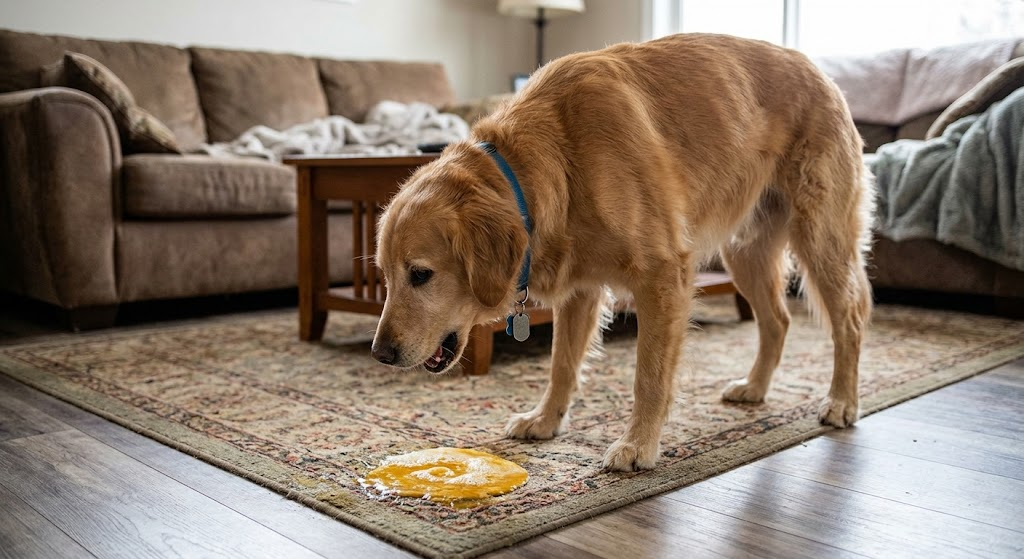
Short answer: Yellow foam or liquid is usually bile, a digestive fluid that shows up when the stomach is empty and gets irritated. A single episode in an otherwise bright, hungry dog is often not an emergency. Repeated vomiting, a swollen belly, blood, or a dog who seems weak needs a vet right away.
This guide helps you read what you are seeing, choose the right next step, and avoid the mistakes that make things worse.
What Yellow Vomit Actually Is
Your dog’s liver makes bile to help break down fat. It is stored in the gallbladder and released into the small intestine after meals. When the stomach sits empty for a long time, bile can flow backward into the stomach. It irritates the lining and your dog throws up a yellow or yellow green fluid, often mixed with frothy white or yellow foam.
That is why the pattern so often shows up early in the morning or late at night, after the longest stretch without food.
Vomit Color Guide
| What you see | Most likely meaning | How urgent |
|---|---|---|
| Yellow foam or yellow liquid, small amount | Bile on an empty stomach | Low if it happens once and your dog acts normal |
| White foam | Saliva and air, or a mild stomach irritation | Low to moderate. Watch the pattern |
| Yellow with food pieces | Dog ate too fast, a diet change, or a stomach upset | Low to moderate |
| Bright green | Grass, bile, or in some cases a toxin or blockage | Moderate. Call the vet if it repeats |
| Pink, red, or streaked with blood | Irritated stomach lining, ulcer, or something swallowed | High. Call a vet the same day |
| Dark brown like coffee grounds | Digested blood | Emergency |
| Repeated foam with nothing coming up | Possible bloat or obstruction | Emergency |
If you are not sure what you are looking at, take a photo before you clean it up. Vets find photos very useful.
Why Dogs Throw Up Yellow: 8 Common Causes
- Long gaps between meals. Dogs fed once a day are the classic case. Bile builds up overnight.
- Bilious vomiting syndrome. This is a recurring pattern of yellow vomiting, usually before breakfast, in dogs that otherwise look healthy.
- Eating grass. Grass can irritate the stomach and trigger foam or yellow fluid.
- Fatty or rich food. A sudden fatty treat can upset the stomach and, in some dogs, lead to pancreatitis. If your dog got into rich snacks, our guide on whether dogs can eat nuts explains why fat matters so much.
- Swallowing something unsafe. Toys, socks, bones, and spoiled food can all cause repeated vomiting.
- Toxins and plants. Some household items and plants cause vomiting within hours. Check what your dog may have chewed with our dog toxic food checker.
- Pancreatitis, liver, or kidney trouble. These tend to bring other signs, such as pain, low energy, or a poor appetite. Read about kidney failure symptoms in dogs if vomiting is happening alongside weight loss or heavy drinking.
- Infections and parasites. More likely in puppies and in dogs that are around other dogs.
Read the Timing
When the vomiting happens is one of the best clues you can give your vet.
- Early morning, before breakfast: points toward an empty stomach and bile reflux.
- Right after eating: points toward eating too fast, a diet problem, or an allergy.
- After drinking a lot of water quickly: may be simple overfilling. Slow down the water bowl and check intake with the dog water intake calculator.
- Random times, plus low energy: more likely a medical cause. Do not wait it out.
Your 24 Hour Plan for a Single Episode
This applies only to an adult dog who vomited once, is still bright, and has no warning signs from the lists below.
Hour 0 to 2: Remove food and let the stomach settle. Keep fresh water available, but offer it in small amounts if your dog gulps. Save a photo of the vomit.
Hour 2 to 6: If there is no more vomiting, offer a very small portion of a bland meal. Plain boiled chicken and white rice is a common choice. Skip oils, spices, and any treats.
Hour 6 to 24: If your dog keeps the small meal down, slowly return to the normal diet over the next day. Spread food into smaller, more frequent meals.
Call your vet if the vomiting returns, your dog refuses food or water, or you see any warning sign below.
Do not try to make your dog vomit at home unless a vet or poison hotline tells you to. It can be dangerous with sharp objects, caustic items, and some toxins.
Warning Signs: Go to the Vet Now
- Vomiting more than two or three times in a day
- Blood in the vomit, or vomit that looks like coffee grounds
- Retching with nothing coming up, plus a swollen or tight belly (a possible bloat emergency)
- Severe weakness, collapse, or pale gums
- Signs of belly pain, like a hunched posture or whining
- Known or suspected swallowing of a toy, sock, or toxin
- Vomiting in a puppy, a senior dog, or a tiny breed. These dogs dehydrate much faster
- Vomit that comes with a high fever, tremors, or seizures
If you are unsure whether your dog is retching or coughing, see our guide on dog coughing and gagging. They can look alike but have different causes.
If your dog is also having loose stools, that is a different pattern with its own steps. See dog throwing up and diarrhea.
What to Tell the Vet
A quick, organized report saves time and often saves money. Have these ready:
- When the vomiting started and how many times it has happened
- The color and texture, with a photo
- The last meal, what it was, and the time
- Any new food, treat, plant, or chewed object
- Your dog’s weight, age, and current medications
- Whether your dog is drinking, peeing, and acting normal
If you are worried about cost, a rough idea of typical charges can help you plan. Try the dog vet cost estimator.
How to Prevent Yellow Vomiting
- Feed smaller, more frequent meals. Two or three meals a day often helps dogs that vomit bile in the morning.
- Add a late evening snack. A small bedtime portion shortens the overnight gap. Ask your vet before changing a dog’s feeding plan, and use the wet food calculator to keep portions on track.
- Slow down fast eaters. A slow feeder bowl or a puzzle mat makes a real difference.
- Keep rich table scraps away. Sudden fatty meals are a common trigger.
- Dog proof the house. Pick up socks, small toys, and anything your dog likes to chew.
- Stay current on vet checks. Dogs with repeat episodes should be checked for underlying causes.
FAQ
Is it normal for a dog to throw up yellow foam?
Once in a while, yes. It is common when the stomach is empty. If it happens often, more than once a day, or comes with other symptoms, it is worth a vet visit.
Why does my dog throw up yellow in the morning?
Usually because bile builds up during a long overnight gap without food. Smaller meals and a bedtime snack often help, but confirm the plan with your vet.
What does white foam vomit mean?
It is often saliva and air mixed with stomach fluid. A single episode is usually minor, but repeated foam with nothing coming up can signal bloat or an obstruction.
Should I feed my dog after vomiting yellow bile?
After a short rest, a small bland meal is typically fine if your dog is otherwise acting normal. If vomiting returns, stop and call your vet.
Can I give my dog medicine for vomiting?
Do not give human medicines without your vet’s direction. Doses that are safe for people can be harmful to dogs.
How long should I wait before calling the vet?
For a single episode in a healthy adult dog, watching for 12 to 24 hours is common. For puppies, seniors, small dogs, or anyone with a warning sign, call right away.
Final Word
A little yellow foam on an empty stomach is one of the most common things dog owners see, and it often has a simple fix. The key is knowing what color means what, tracking the timing, and acting fast when the warning signs appear.