
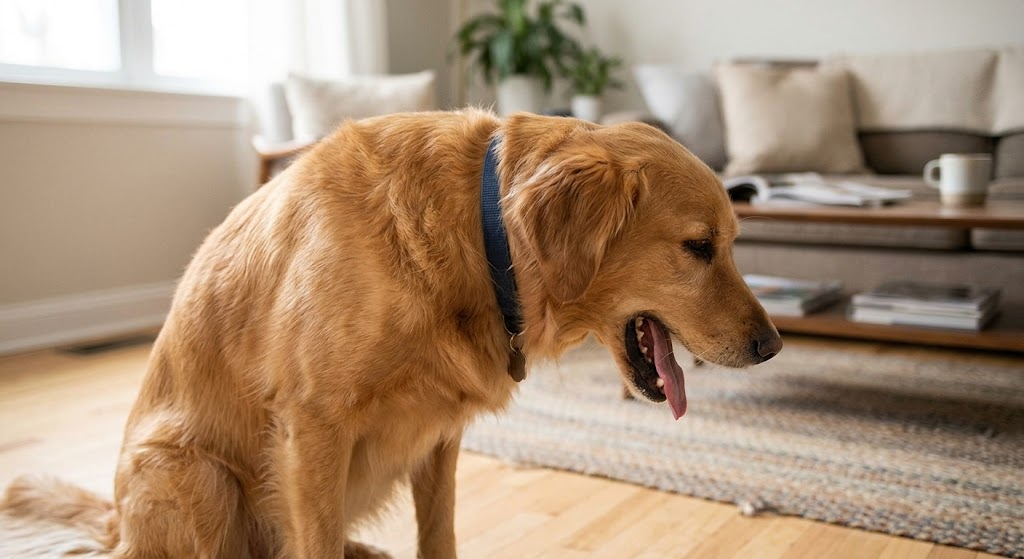
If your dog keeps coughing and gagging, the cause is often something fairly common, such as kennel cough, throat irritation, or a collar pulling on the neck. But the same sounds can also come from heart disease, a collapsing windpipe, or something stuck in the throat. The key is to pay attention to what the cough sounds like, when it happens, and what else is going on.
Most articles give you a list of causes and a vague “see your vet.” This guide goes a step further. You will get a Cough Clue Matcher that links the timing and sound of the cough to likely causes, a quick test to tell gagging from choking and reverse sneezing, and a 30 second video checklist that makes your vet visit far more useful.
This article is general education and does not replace advice from your veterinarian. If your dog is struggling to breathe, go to an emergency clinic.
The Quick Answer
- A mild, occasional cough in an otherwise normal dog is often kennel cough, throat irritation, or a reaction to something in the air, and it can sometimes be watched for a short time.
- A honking cough, a cough at night, a cough after exercise, or a cough in a senior or small breed dog deserves a vet visit soon, because it can point to the windpipe or the heart.
- Trouble breathing, blue or pale gums, collapse, coughing up blood, or nonstop gagging is an emergency.
- Never give human cough medicine. Many contain ingredients that are harmful to dogs, including xylitol.
Coughing vs Gagging vs Choking vs Reverse Sneezing
These look alike to worried owners but mean different things. Knowing which one you saw helps your vet a lot.
- Coughing: A forceful push of air from the lungs or windpipe. It can sound dry and hacking, wet and gurgly, or like a honk.
- Gagging: A retching motion at the back of the throat, often followed by foamy liquid or nothing at all. Dogs may gag after a cough because the throat is irritated.
- Choking: Something is blocking the airway. The dog may panic, paw at its mouth, drool, struggle to breathe, and show blue gums. This is an emergency.
- Reverse sneezing: A sudden burst of loud snorting inhales, usually while the dog stands still with its neck stretched out. It often passes in under a minute and the dog acts normal right after.
If you are not sure, record a video of the next episode. It is the most useful thing you can bring to your vet.
Cough Clue Matcher: What the Sound and Timing Might Mean
This is a general guide, not a diagnosis. Use it to describe what you see to your vet.
A dry, hacking cough that ends in a gag or foamy white liquid Often linked to kennel cough or throat irritation. Many people say it sounds like something is stuck in the throat. The dog usually seems otherwise bright. See your vet if it lasts more than a few days, or sooner for puppies and seniors.
A loud honking cough, like a goose Often linked to a collapsing trachea, which is most common in small and toy breeds. It can get worse with excitement, pulling on the leash, or pressure from a collar. Tell your vet, and see the harness tip below.
A cough at night or when lying down Can be linked to heart disease, especially in older and small breed dogs. This is a reason to call your vet soon, even if your dog seems fine during the day.
A cough after exercise, excitement, or drinking Can point to heart or airway problems, or irritation from drinking too fast. If your dog tires easily or has less stamina than before, mention it.
A wet, gurgly cough Can be linked to fluid in the lungs, infection, or pneumonia. This needs a vet visit.
A cough with sneezing, runny nose, or watery eyes Often linked to upper respiratory infection or allergies. Do dogs cough from allergies? Yes, they can, especially with pollen, dust, or mold, and they may also itch or have watery eyes.
A cough that started a few days after boarding, daycare, a groomer, or a dog park Kennel cough is a common suspect, since it spreads easily among dogs that share air and spaces.
Coughing mainly on walks when the leash is tight Can point to neck pressure, throat irritation, or a collapsing trachea. A harness often helps.
30 Second Video Checklist for Your Vet
A short clip can show what a description cannot. When the cough happens again, try to capture:
- The sound. Hold the phone close and keep it quiet around you.
- The full body. Show your dog’s chest, neck, and posture. Many dogs stretch the neck forward.
- What comes up. Foam, mucus, or nothing.
- What happened right before, such as excitement, a walk, drinking, or lying down.
- Your dog’s breathing right after. Does it recover in seconds, or keep struggling?
Also note the date and time and how often it happens. A short written log helps your vet spot patterns.
Common Causes of Dog Coughing and Gagging
Kennel Cough (Infectious Tracheobronchitis)
This is a highly contagious airway infection often caused by several germs, including Bordetella. It usually brings a harsh, dry cough that can end in a gag. Many dogs still eat and play normally. It often runs its course in one to three weeks, but see your vet because other causes can look similar, and puppies and seniors can get worse. Keep your dog away from other dogs until your vet says it is safe. Check your puppy’s protection with our puppy shots schedule, and if you travel, see how boarding compares to pet sitting when it comes to exposure.
Collapsing Trachea
The windpipe weakens and flattens, causing a honking cough. It is common in small breeds such as Yorkies, Chihuahuas, Pomeranians, and toy poodles. Excess weight, excitement, heat, and neck pressure make it worse. Use our dog weight and body condition score checker to see whether your dog may be carrying extra weight.
Heart Disease
A weakened heart can cause fluid to back up into the lungs, leading to coughing, especially at night or after activity. Other signs include tiring quickly, faster breathing, and restlessness. It is more common in older and small breed dogs. If your dog is older, see our senior dog wellness check in to organize what you have noticed before your visit.
Allergies and Irritants
Pollen, dust, smoke, strong perfumes, cleaning sprays, and mold can irritate the airway. Cough from allergies is often mild, may be seasonal, and may come with itching or watery eyes.
Something Stuck in the Throat
Grass seeds, bone pieces, sticks, and toy fragments can lodge in the throat or nose. Sudden coughing and gagging after chewing something is a reason to call your vet. If your dog is choking, treat it as an emergency.
Pneumonia and Lung Infections
A wet, deep cough with fever, low energy, or poor appetite can point to pneumonia. This needs veterinary care.
Parasites and Other Infections
Heartworm and lungworm can cause chronic cough. Canine influenza and other respiratory viruses can also cause coughing, sneezing, and nasal discharge. Prevention and vet testing matter here.
Laryngeal Problems
In some older, larger dogs such as Labradors, the throat muscles weaken and can cause noisy breathing, coughing, and gagging, especially in heat or with exercise. Tell your vet if your dog’s bark has changed or breathing sounds raspy.
Throat Irritation After Vomiting or Nausea
Sometimes gagging comes from stomach upset instead of the airway. If your dog is also vomiting or has loose stool, read our guide to dog throwing up and diarrhea.
When to Go to the Vet and When to Go to the Emergency Clinic
Go to an Emergency Clinic Now
- Struggling to breathe, belly heaving, or neck stretched out while gasping
- Blue, purple, or very pale gums
- Collapse or severe weakness
- Coughing up blood or pink foamy liquid
- Signs of choking, such as pawing at the mouth, panic, or drooling
- Nonstop coughing or gagging with no relief
- A cough after heat exposure with heavy panting, which may be heatstroke (use our dog heatstroke risk calculator and call your vet at once)
Call Your Vet Within a Day or Two
- A cough lasting more than a few days
- A honking cough
- A cough at night or when lying down
- A cough after exercise or low stamina
- A cough in a puppy, senior, or small breed dog
- Cough with loss of appetite, fever, or low energy
- Cough with a nasal discharge or sneezing that does not improve
Possibly Watch at Home for a Short Time
- A mild, occasional cough in an otherwise healthy adult dog who is eating, playing, and breathing normally
Even then, call your vet if it lasts more than a few days or gets worse.
Supportive Care at Home (After You Have Talked With Your Vet)
These steps are general comfort measures and do not replace treatment.
- Switch to a harness. Collars put pressure on the neck and can trigger coughing. Check sizing with our dog harness size calculator and make sure any collar fits well using the dog collar size calculator.
- Work on loose leash walking so your dog is not pulling against the neck. Our dog training plan can help you build a routine.
- Keep things calm. Excitement can set off coughing, so keep play and exercise gentle until your vet says otherwise.
- Avoid irritants such as smoke, strong sprays, and dusty areas.
- Add moisture to the air. A cool mist humidifier or a short time in a steamy bathroom may feel soothing. Never leave your dog in a hot room.
- Keep water available and encourage calm drinking.
- Isolate from other dogs if kennel cough is suspected.
What Not to Do
- Do not give human cough syrups, cold medicines, or pain relievers. Some contain xylitol, acetaminophen, or other ingredients that are dangerous to dogs.
- Do not give leftover antibiotics or any medicine without your vet’s direction.
- Do not wait if breathing looks hard or gums look blue or pale.
- Do not ignore a night cough, even if your dog seems fine during the day.
What Will the Vet Do?
Your vet will listen to the heart and lungs, check the throat and gums, and ask about timing, vaccines, travel, and exposure to other dogs. Depending on what they find, they may recommend chest x rays, bloodwork, heartworm testing, an airway exam, or medication. Costs vary by region and the tests needed, so for a rough idea, try our dog vet cost estimator.
How to Help Prevent Coughing Problems
- Keep vaccines current, including those your vet recommends for kennel cough based on your dog’s lifestyle.
- Use a harness, especially for small breeds and dogs that pull.
- Keep your dog at a healthy weight.
- Stay on heartworm and parasite prevention.
- Limit exposure to smoke and strong fragrances.
- Choose boarding and daycare carefully, and ask about vaccine requirements.
- Keep older dogs on a regular check up schedule so changes in the heart and airway are found early.
Frequently Asked Questions
Why is my dog coughing and gagging but not throwing up?
Gagging is a reflex at the back of the throat. It is often triggered by irritation from coughing, so many dogs gag without bringing anything up. Foamy white liquid is common. If it keeps happening, see your vet.
Is dog coughing and gagging kennel cough?
It can be, especially if your dog was recently around other dogs and has a dry, hacking cough that ends in a gag. Other conditions can look the same, so check with your vet, especially for puppies and seniors.
What does kennel cough sound like?
It is usually a harsh, dry, hacking cough that often sounds like something is stuck in the throat, sometimes followed by a gag or a little foam.
What is a honking cough in dogs?
A loud cough that sounds like a goose honk. It is often linked to a collapsing trachea in small breeds, so tell your vet.
Why does my dog cough and gag at night?
A night cough can be related to heart disease, a collapsing trachea, or allergies. Because the heart can be involved, call your vet soon.
Can allergies cause coughing and sneezing in dogs?
Yes. Pollen, dust, and mold can cause coughing, sneezing, and watery eyes, and often come with itching too.
When should I worry about a dog coughing?
Worry right away about trouble breathing, blue or pale gums, collapse, coughing up blood, or nonstop gagging. Call your vet soon for a honking cough, a night cough, low stamina, or a cough that lasts more than a few days.
Can I give my dog honey or cough syrup?
Ask your vet first. Human cough syrups can contain ingredients that are unsafe for dogs, such as xylitol, so do not give them without veterinary direction.
How long does kennel cough last?
It often improves within one to three weeks, but it can last longer or turn into something worse. Your vet can guide you on how long to keep your dog away from other dogs.
The Bottom Line
Dog coughing and gagging is often mild, but the sound, the timing, and your dog’s age can point to something that needs care. Use the Cough Clue Matcher to describe what you see, record a short video, and call your vet for any honking, night time, or lasting cough. Go to an emergency clinic for any trouble breathing.
Switch to a harness, avoid irritants, skip human medicine, and let your vet guide treatment.