
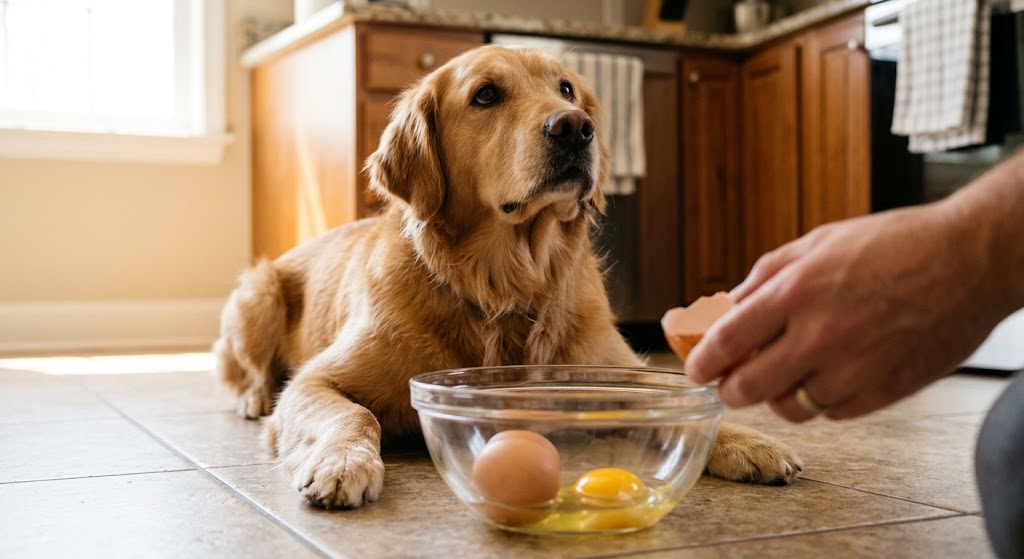
Can dogs eat raw eggs? Yes, most healthy adult dogs can eat a small amount of raw egg without trouble, but it is not the safest choice. Raw eggs can carry Salmonella, and a cooked egg gives your dog almost all of the same nutrition with far less risk. If you do feed raw egg, the portion size and your dog’s health status matter more than most articles admit.
This guide gives you the quick answer first, then something most pages skip: an egg calorie budget that tells you exactly how much egg fits into your dog’s day, plus a simple check for whether your dog should skip raw egg completely.
The Quick Answer
- Healthy adult dog: A small amount of raw egg is generally tolerated, but cooked is the safer default.
- Puppies, senior dogs, pregnant dogs, and dogs with weak immune systems: Skip raw egg and serve it fully cooked instead.
- Dogs with pancreatitis, a history of stomach trouble, or a known egg allergy: Skip eggs unless your vet says otherwise.
- Households with babies, older adults, or anyone immunocompromised: Cooked only, because Salmonella can pass from dog to person.
Are Raw Eggs Safe for Dogs?
Raw eggs are not toxic to dogs. The concern is bacteria, not the egg itself. Here is what actually matters.
Salmonella Risk
Raw eggs can carry Salmonella on the shell or inside the egg. Many healthy dogs handle small exposures without symptoms, but some get sick, and that risk rises in puppies, seniors, and dogs already dealing with illness.
The less obvious risk is for the people in your home. A dog that eats contaminated egg can shed Salmonella in saliva and stool for a short time. If your dog licks a toddler’s face or you handle the poop bag right after, that bacteria can reach you.
The Biotin Myth (What Is True and What Is Not)
You may have read that raw egg whites cause biotin deficiency. There is real science behind this. Raw egg white contains avidin, a protein that binds biotin (a B vitamin that supports skin, coat, and metabolism). Cooking breaks avidin down.
Here is the part most pages leave out: a deficiency generally requires large amounts of raw egg white fed regularly over a long period. An occasional egg will not cause it. Egg yolk is also rich in biotin, which helps balance things out. So the biotin issue is real, but it is not the main reason to be careful. Salmonella is.
Egg Allergy
Eggs are a less common food allergen in dogs than beef, dairy, or chicken, but it does happen. Watch for itching, ear trouble, paw licking, or loose stool after introducing eggs. If you suspect a food reaction, our dog food sensitivity test can help you organize what you have noticed before you talk to your vet.
Raw vs Cooked Eggs: Which Is Better for Dogs?
Cooked eggs win for most dogs. Here is the plain comparison.
Raw egg
- Salmonella risk: present
- Avidin (blocks biotin): active
- Protein digestibility: lower
- Best for: healthy adult dogs, small amounts, owners who accept the risk
Cooked egg (scrambled, boiled, or poached, with no oil, butter, salt, or seasoning)
- Salmonella risk: eliminated when cooked through
- Avidin: broken down
- Protein digestibility: higher
- Best for: nearly every dog, including puppies and seniors
If your dog loves the texture of raw egg on kibble, a soft scrambled egg cooked without fat gives you a similar experience with a much better safety profile.
Our Egg Calorie Budget: How Much Egg Can Your Dog Have?
Most articles say “one egg a day for a big dog” and stop. That ignores how little room small dogs have in their daily calories. A better approach is to treat egg as a topper and keep it within 10% of your dog’s daily calories, the same rule many vets use for treats.
A large egg has roughly 70 calories. Using typical calorie needs for a moderately active adult dog (your dog’s exact number will vary), here is the budget:
Toy dog, about 10 lb (around 200 calories a day) Treat budget: about 20 calories. That is roughly a quarter of an egg, and only once or twice a week.
Small dog, about 25 lb (around 400 calories a day) Treat budget: about 40 calories. That is roughly half an egg, two to three times a week.
Medium dog, about 50 lb (around 700 calories a day) Treat budget: about 70 calories. That is one whole egg, two to three times a week.
Large dog, about 80 lb (around 1,000 calories a day) Treat budget: about 100 calories. That is about one and a half eggs, a few times a week.
These are starting points, not prescriptions. If your dog is overweight, less active, or on a weight loss plan, cut the portion. Use our dog calorie calculator to get a daily number for your own dog, then take 10% of it as your egg and treat budget. If the scale is already creeping up, check where your dog stands with the dog weight and body condition score checker first.
Remember that the egg is not free. If you add egg as a topper, trim the same number of calories from the regular meal so you are not quietly adding weight. If your dog has stalled on a diet already, our guide to a dog weight loss plateau explains why small extras like this matter.
Should Your Dog Skip Raw Egg? A 30 Second Check
Go through these questions. If you answer yes to any of them, serve egg fully cooked or skip it.
- Is your dog under 1 year old or over 10 years old?
- Is your dog pregnant, nursing, or recovering from surgery or illness?
- Does your dog take steroids or any medication that affects the immune system?
- Has your dog ever had pancreatitis or frequent stomach upset?
- Does anyone in your home have a weakened immune system, or is there a baby or toddler who gets close to the dog?
- Are you unsure where the eggs came from or how long they have been stored?
If you answered no to all six, a small raw portion is a low risk choice for most dogs. Even then, cooked is the safer way to get the same benefits.
How to Reduce the Risk If You Still Feed Raw Egg
If you decide to feed raw egg, these habits cut the risk meaningfully.
- Buy fresh, refrigerated eggs and keep them cold until use.
- Check the date and never use cracked or dirty eggs.
- Crack the egg into a clean bowl instead of straight onto the food, and look for anything unusual.
- Wash your hands, the bowl, and the counter with hot soapy water right after.
- Serve it fresh and pick up uneaten food within 20 to 30 minutes.
- Do not let your dog lick faces right after a raw egg meal if kids or vulnerable adults are around.
- Start with a few teaspoons to see how your dog’s stomach handles it.
Can Dogs Eat Egg Shells?
Egg shells are mostly calcium carbonate, and some owners add them as a calcium source. Raw shells carry the same Salmonella risk as the egg, and sharp pieces can irritate the mouth and throat.
If you want to use shells, rinse them, bake them until dry and brittle, and grind them to a fine powder. Even then, do not guess at amounts. Too much calcium can cause digestive problems, and a dog on a complete commercial food already gets the calcium it needs. Ask your vet before adding shell powder regularly.
Does Raw Egg Make a Dog’s Coat Shinier?
Eggs contain protein, fat, and nutrients like riboflavin and selenium that support skin and coat health, so a dog that was short on these may look better. But a dog eating a complete and balanced food usually does not need egg for a shiny coat. Cooked egg gives you the same nutrients without the raw egg risks, so if coat quality is your goal, cooked wins again.
What About Raw Egg in a Raw Food Diet?
Some raw feeders include egg as part of a prepared diet. Major veterinary organizations in the US do not recommend raw diets because of bacterial risks to both pets and people. If you feed a raw diet, talk to your vet or a veterinary nutritionist so the full diet is balanced, and treat egg as one small part of the plan rather than a fix for gaps.
Other Foods to Check Before You Share
Egg is one of the safer human foods you can share, but plenty of kitchen items are not. Before you add anything new to the bowl, run it through our dog toxic food checker. Holiday season brings extra hazards too, so see whether poinsettias are toxic to dogs if you decorate with plants. If chocolate or raisins are within reach of your dog, the chocolate and raisin toxicity calculator can help you decide how urgent the situation is.
Cold weather can also change how much your dog should eat overall. If you are thinking about adding extras for the winter, read whether dogs need more food in winter before you increase portions.
Signs Your Dog Reacted Badly to Raw Egg
Watch your dog for the next 6 to 72 hours after a raw egg. Signs of Salmonella or a food reaction include:
- Vomiting
- Diarrhea, sometimes with mucus or blood
- Fever
- Lethargy or low energy
- Loss of appetite
- Belly pain or a hunched posture
- Itching or swollen face (possible allergy)
Call your vet promptly if symptoms last more than 24 hours, if your dog is a puppy or senior, or if you see blood, repeated vomiting, or signs of dehydration. Facial swelling or trouble breathing is an emergency. If you want a rough idea of what a visit might cost, try the dog vet cost estimator.
Frequently Asked Questions
Can dogs eat raw eggs every day?
It is better not to. Daily raw egg increases your exposure to Salmonella and adds calories that can lead to weight gain. A few times a week within your dog’s 10% treat budget is a more sensible limit, and cooked egg is the better option for regular feeding.
Can puppies eat raw eggs?
It is safest to avoid raw egg for puppies. Their immune systems are still developing, and a bout of vomiting or diarrhea can dehydrate a small puppy quickly. A small amount of fully cooked, plain egg is a better choice once your vet agrees your puppy is ready for extras.
Can dogs eat raw egg yolk only?
Yolk carries the same Salmonella concern as the rest of the egg, and it is higher in fat and calories. Dogs prone to pancreatitis should avoid it. For most dogs, cooked yolk in a small portion is the safer way to go.
Is a raw egg good for a sick dog?
No. A sick dog has less ability to fight off bacteria, so raw egg is a poor choice. If your dog is unwell and not eating, call your vet instead of experimenting with foods at home.
Can dogs eat scrambled eggs?
Yes, if they are plain. Cook them without butter, oil, salt, onions, or garlic, and let them cool before serving. Keep the portion within the calorie budget above.
Can dogs eat boiled eggs?
Yes. Hard boiled eggs are one of the simplest ways to share egg. Peel them, chop them up, and serve a small portion as a topper or training treat.
How many eggs can a dog eat per week?
For most healthy dogs, two to three small portions per week fits within a normal treat budget. Smaller dogs need much smaller portions than the chart suggests for large breeds, so scale to your dog’s size.
The Bottom Line
Can dogs eat raw eggs? Healthy adult dogs usually can, in small amounts and with good food handling. But the benefits of egg are nearly identical when cooked, and the risks are much lower. For puppies, seniors, pregnant dogs, dogs with health conditions, and homes with vulnerable people, cooked egg is the clear choice.
Whatever you choose, treat egg as part of your dog’s calorie budget, not an add on. Start small, watch how your dog responds, and talk to your vet if you are unsure.