
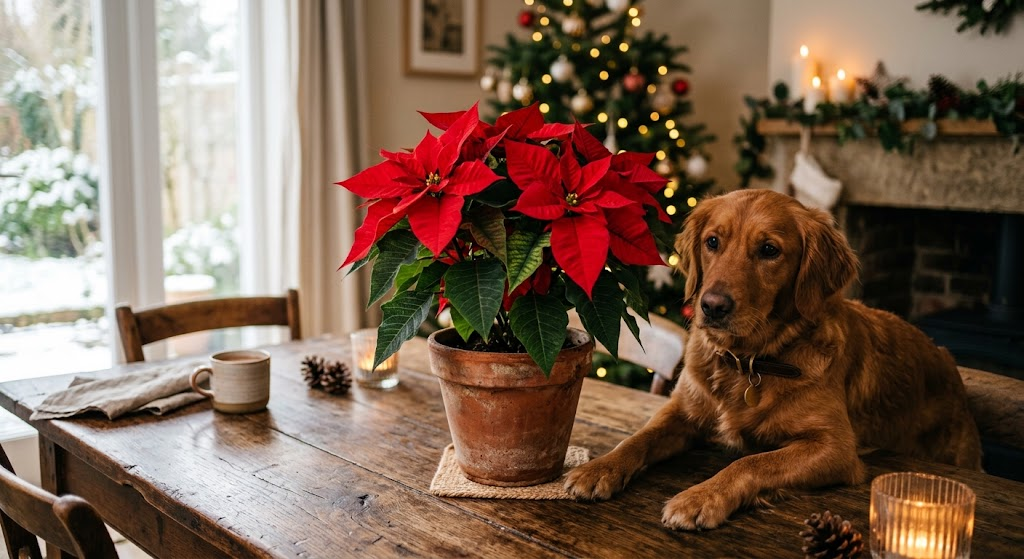
Short answer: Yes, but only mildly. Poinsettias are considered mildly toxic to dogs. The milky sap can irritate the mouth and stomach, so the usual result is drooling, lip licking, or an upset stomach, and serious poisoning is not expected. The bigger risk at the holidays is that a dog chewing one plant may be chewing others that are far more dangerous. Know which is which, and call your vet if your dog has repeated vomiting, seems weak, or you are not sure what was eaten.
How toxic are poinsettias to dogs?
The poinsettia has a reputation as a deadly holiday plant, and that reputation is much worse than the reality. The sap contains compounds that irritate the lining of the mouth and digestive tract. In most dogs that means mild, short lived stomach upset.
What this does not mean: it does not mean you can ignore it. A small dog, a puppy, or a dog that ate a lot of leaves can have a rougher time, and some dogs react strongly to the sap on skin or in the eyes. Treat it as a “watch and call if it escalates” situation, not as an emergency by default.
Symptoms to watch for
| Symptom | What it usually means |
|---|---|
| Drooling, pawing at the mouth, lip licking | Sap irritating the mouth. Common and usually mild |
| A single episode of vomiting | Stomach irritation. Watch closely |
| Repeated vomiting or diarrhea | More than mild upset. Call your vet |
| Red or itchy skin where the sap touched | Skin irritation from sap |
| Watery, red, or squinting eyes | Sap in the eyes |
| Refusing food, lethargy, or weakness | Not typical of poinsettia alone. Call your vet now, because something else may be going on |
Symptoms usually appear soon after chewing and often settle within a day, but your vet should guide you if they do not.
What to do if your dog ate a poinsettia
Act in this order:
- Remove the plant and any pieces from your dog’s mouth if you can do it safely.
- Offer fresh water. Wipe away sap around the mouth and rinse skin or eyes with plain water if the sap touched them.
- Note the details: roughly how much was eaten, what time it happened, and your dog’s size and age. Take a photo of the plant and its tag.
- Do not make your dog vomit unless a vet or poison control tells you to.
- Watch for 24 hours, and call for advice sooner if any red flag below appears.
| Situation | What to do |
|---|---|
| Licked a leaf or sap, no symptoms | Watch at home and keep water available |
| Chewed a leaf, drooling or one episode of vomiting | Watch closely and call your vet if it repeats or does not settle |
| Ate several leaves, repeated vomiting, diarrhea, or will not eat | Call your vet the same day |
| Puppy, small dog, senior, or a dog with health problems | Call your vet sooner, even for mild signs |
| Weakness, collapse, trouble breathing, seizures, or you do not know which plant it was | Emergency vet or poison control right away |
Poison help lines are available around the clock, and a fee may apply: the ASPCA Animal Poison Control Center at 888 426 4435 and the Pet Poison Helpline at 855 764 7661.
The holiday plant risk ladder
This is the part most guides skip. Poinsettias are at the gentle end. If your dog is a plant chewer, these are the ones to watch more carefully:
| Holiday item | Risk to dogs | What can happen |
|---|---|---|
| Christmas cactus | Considered non toxic | A safer decorating choice |
| Poinsettia | Mild | Drooling and mild stomach upset |
| Christmas tree needles and tree water | Mild to moderate | Stomach upset. Water with preservatives or fertilizer adds risk |
| Holly (leaves and berries) | Moderate | Vomiting, drooling, diarrhea |
| Amaryllis (especially the bulb) | Moderate | Vomiting, drooling, lethargy |
| Mistletoe | Moderate to serious | Stomach upset, and larger amounts can affect the heart. Call your vet |
| Lilies | Mild stomach upset in dogs, but cats can suffer kidney failure | Keep away from cats in the home |
| Sago palm (houseplant) | Severe | Can cause liver failure. Always an emergency |
If a dog chews any plant you cannot identify, call your vet or poison control instead of guessing.
How to keep your dog safe with holiday plants
- Place plants out of reach, on high shelves or in rooms the dog cannot enter. Hanging planters help.
- Cover the tree water with a tree skirt or a guard so the dog cannot drink it.
- Sweep up fallen leaves, needles, and berries, because dogs often chew them from the floor.
- Choose safer decorations such as a Christmas cactus or artificial greenery, and check that artificial pieces cannot be swallowed.
- Watch the table too. Holiday plants are one risk, and food is another. For foods, use the Dog Toxic Food Checker, and for chocolate or raisins, use the Chocolate and Raisin Toxicity Calculator.
When to call your vet
- Repeated vomiting, diarrhea, or refusing food after chewing a plant
- Drooling that does not settle, or a swollen mouth or face
- Weakness, collapse, trouble breathing, tremors, or seizures
- A puppy, small dog, senior, or dog with a health condition that chewed any plant
- You are not sure which plant was eaten
Bring the plant, its tag, or a clear photo.
FAQ
Are poinsettias toxic to dogs?
Mildly. The sap can irritate the mouth and stomach, causing drooling or an upset stomach, but serious poisoning is not expected.
Are poinsettia plants toxic to dogs?
Yes, in the same mild way. The leaves, stems, and sap all contain the irritating sap, so any part chewed can cause stomach upset.
How toxic are poinsettias to dogs?
Not very. Most dogs have short lived mouth or stomach irritation. The risk rises for small dogs, puppies, and dogs that eat a lot.
Are poinsettias toxic to cats and dogs?
Both can get mild mouth and stomach irritation. Poinsettias are not the main holiday plant danger for cats. Lilies are, because they can cause kidney failure in cats.
Are poinsettias poisonous?
They are mildly toxic to dogs and cats. Their reputation as deadly is exaggerated, but they can still make a pet unwell.
Should I make my dog vomit after eating a poinsettia?
No, unless a vet or poison control tells you to. Call for advice first.
What should I do if my dog ate a poinsettia?
Remove the plant, offer water, note how much was eaten and when, and watch for 24 hours. Call your vet if vomiting repeats or your dog seems unwell.
General information, not veterinary advice. If you think your dog ate something harmful, call your vet or a poison control line right away.