
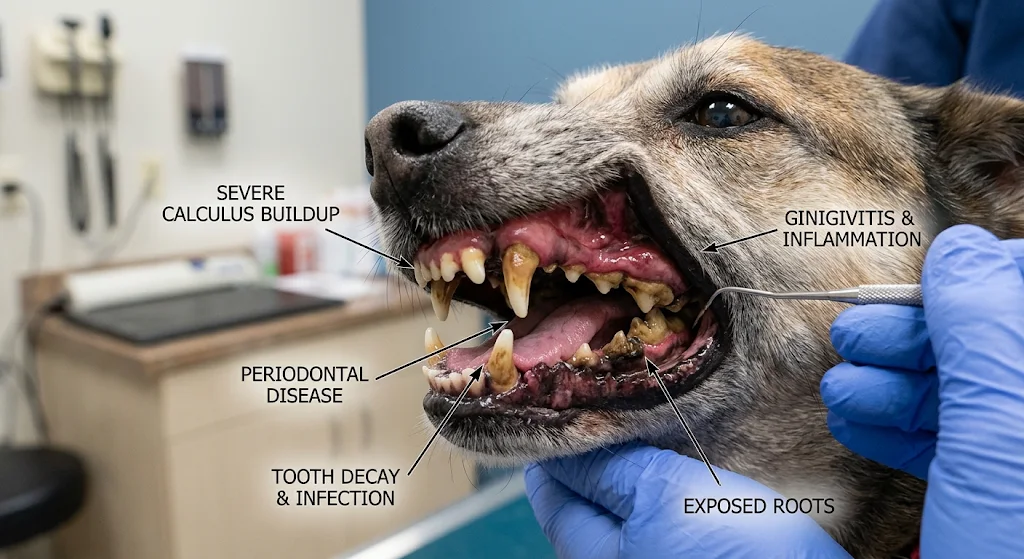
Short answer: Rotten teeth in dogs are usually the result of long term plaque and tartar that lead to gum disease, infection, and tooth loss. They almost always hurt, even if your dog keeps eating. Broken, dead, or infected teeth need a vet visit, because a damaged tooth does not heal on its own and infection can spread.
This guide shows you what to look for, how to tell a minor chip from an emergency, what to do in the first 24 hours, and how to prevent the problem.
Why Dogs Hide Dental Pain
Dogs are built to hide pain. A dog with a rotten tooth will often still eat, still wag, and still beg for treats. Many owners only notice when the problem is advanced.
That is why dental trouble is so common. Most dogs show some sign of dental disease by the time they are a few years old, and many cases go unnoticed for a long time. Do not use your dog’s appetite as proof that the mouth is fine.
Signs of Tooth Pain in Dogs
Look for any of these, especially if you see more than one:
- Bad breath that is strong or has changed (a rotten or sour smell is a warning sign)
- Chewing on one side, dropping food, or taking longer to finish meals
- Pawing at the face or rubbing the mouth on the carpet
- Drooling more than usual, sometimes with a pink tint
- Swelling under an eye or on the cheek (a possible tooth root abscess)
- Reluctance to play with toys or chew bones
- Pulling away when you touch the face or mouth
- Red, swollen, or bleeding gums
- Brown or yellow crust along the gumline
- A tooth that looks gray, purple, or dark
- Irritability or a change in behavior
Not sure whether the odor is dental, or from another cause? Our guide on why a dog’s breath can smell like poop covers other reasons for foul breath, so you can compare.
Do Dogs Get Cavities?
Yes, but not as often as people. Dogs can get tooth decay, though it is less common because their teeth are more pointed and they eat a different diet. The much bigger problem in dogs is periodontal disease: plaque hardens into tartar, bacteria irritate the gums, and the tissue holding the tooth begins to break down.
If you search for “dog tooth decay stages”, this is what you are usually seeing:
| Stage | What it looks like | What it means |
|---|---|---|
| 1. Gingivitis | Slightly red gums, mild tartar, bad breath | Reversible with a professional cleaning and good home care |
| 2. Early periodontitis | More tartar, red and puffy gums, bleeding when touched | Damage to the supporting tissue begins |
| 3. Moderate periodontitis | Gum recession, loose teeth, heavy buildup, pain | The tooth’s support is breaking down |
| 4. Advanced disease | Pus, exposed roots, mobile or rotten teeth, bone loss | Infection and tooth loss are likely, and it can affect the rest of the body |
Dogs in stage 1 can often be fully recovered. Stages 3 and 4 usually mean that some teeth need to be removed.
Broken Tooth in Dogs: How Serious Is It?
Dogs break teeth on bones, antlers, hard nylon toys, ice, rocks, and even fetching a hard ball. The upper fourth premolar (the large chewing tooth in the back) and canine teeth are the most commonly damaged. The severity depends on how deep the break goes.
| Type of break | What you see | Urgency |
|---|---|---|
| Small enamel chip | Rough edge, no color change, no bleeding | Low. Book a dental check soon |
| Crown fracture, pulp not exposed | Larger break, tooth looks yellow or brown inside | Moderate. See a vet within days |
| Crown fracture, pulp exposed | A pink or red dot in the center of the break, or bleeding | High. Same day or next day, as bacteria can enter the tooth |
| Root fracture or loose tooth | Swelling, pain, tooth moves | High. See a vet soon |
| Dead tooth (discolored) | Tooth turns gray, purple, or dark brown, often after trauma | Moderate to high. It may be infected inside |
The pink or red dot matters. It is the pulp (nerve and blood supply), and an exposed pulp is painful and can lead to infection and abscess. A chipped canine tooth is especially worth having checked, because canines are long and have deep roots.
What to Do in the First 24 Hours After a Broken Tooth
- Stay calm and look gently. If your dog lets you, check the mouth for broken pieces, bleeding, or swelling. Do not force it, because a painful dog may bite.
- Rinse if needed. If there is blood or debris, rinse with a little cool water.
- Offer soft food. Switch to soft or wet food and avoid hard chews until the vet has seen the tooth.
- Remove chew toys and bones. Take away anything hard.
- Save any tooth pieces. Put them in a clean container to show the vet, if you can.
- Call the vet. Tell them what broke, how much of the tooth is missing, and whether you see a pink dot or bleeding.
Do not give human pain medication. Common painkillers like ibuprofen and acetaminophen can be very dangerous for dogs. Do not try to pull a loose tooth yourself, and do not apply home remedies to the break.
Infected Tooth in a Dog
An infection inside or under a tooth is called an abscess. It often starts when bacteria reach the root through a broken tooth or deep gum disease. Signs include:
- Swelling on the face, often below the eye
- A draining spot on the cheek or gums
- Bad breath with a rotten smell
- Fever, lethargy, or loss of appetite
- Pain when eating
An abscess is not something to wait out. It can spread, and in some cases bacteria from the mouth enter the bloodstream and affect organs. A vet typically needs to treat the infected tooth, with antibiotics and pain relief in some cases.
Dead Tooth in a Dog
A tooth that has lost its blood supply turns gray, purple, or dark brown. Often it was hit or broken at some point, even if you never noticed. A dead tooth can look fine except for the color, but it is usually infected or will become so. A vet will usually recommend either a root canal or removal.
Stomatitis in Dogs: When the Whole Mouth Is Inflamed
Some dogs get severe, widespread inflammation of the gums and mouth tissues, called stomatitis. It looks very red, may bleed easily, and often makes eating extremely painful. It is less common than ordinary gum disease and needs a vet to figure out the cause. If your dog’s mouth looks raw or inflamed all over, do not wait.
How Vets Treat Rotten or Broken Teeth
Treatment depends on the tooth, but the general options are:
- Professional cleaning and scaling to remove tartar above and below the gumline (stages 1 and 2)
- Dental X rays to see the roots and the bone, which is something a normal exam cannot do
- Extraction of teeth that are loose, infected, or damaged beyond saving
- Root canal or crown work with a veterinary dentist, in some cases, to save a strategic tooth like a canine
- Pain medication and antibiotics when needed
Most of this requires general anesthesia, which is the part that worries many owners. It is needed so the vet can clean below the gumline, take X rays, and treat the mouth safely. Your vet will usually run pre-anesthetic checks based on your dog’s age and health, and senior dogs often benefit from a full wellness review first. Our senior dog wellness check in is a good place to start.
What if my dog has a tooth pulled? Many dogs feel much better after a painful tooth is removed. Dogs can eat well with fewer teeth, and most go back to normal food after a short recovery with soft meals.
What does it cost? Prices vary a lot by region, the number of extractions, and whether imaging is included. For an idea of the typical charges, see our dog dental cleaning cost guide, and use the dog vet cost estimator to plan for a larger bill.
How to Prevent Rotten Teeth
- Brush often. Daily is best, a few times a week is still helpful. Use a toothpaste made for dogs, never human toothpaste.
- Use dental approved products. Look for chews and diets with proven plaque control, and check the label for what they are meant to do.
- Schedule dental checks. Many vets recommend a dental exam at least once a year, and some breeds need more.
- Know your dog’s risk. Small and toy breeds, flat faced breeds, and dogs with crowded teeth tend to build tartar faster.
- Watch the weight of the chew. Hard chews can break teeth, as explained below.
- Check teeth at home. Lift the lip once a week and look for tartar, red gums, or a broken tooth.
If you are not sure whether a tooth is still a baby tooth, see when dogs lose their baby teeth. Retained baby teeth are a separate issue that a vet can check. You can also use the dog teeth age estimator to get a general idea of what to expect at different ages.
The Thumbnail Test for Chews
Many broken teeth come from chews that are too hard. A simple rule of thumb is to press your thumbnail into the chew. If it does not leave a dent, it may be hard enough to damage teeth.
Be careful with:
- Real bones, especially weight bearing leg bones
- Antlers and hooves
- Hard nylon bones
- Ice cubes
- Rocks and hard balls
Softer chews that bend slightly are generally a safer bet. Supervise your dog and throw away anything that is cracked or splintering. Size matters too: a chew should be too large to swallow whole.
When to Go to the Vet Right Away
Go to the vet promptly, or the same day, if you notice:
- A broken tooth with a pink or red center, or active bleeding
- Facial swelling or a draining spot on the face
- Refusing to eat or drink
- Severe drooling or pawing at the mouth
- Pus, a foul smell, or a gray or dark tooth
- Fever, lethargy, or vomiting with the mouth problem
If vomiting starts, see our guide on why dogs throw up yellow foam.
FAQ
Can a dog live with a rotten tooth?
They can survive, but it is painful and the infection can spread. Rotten teeth should be treated.
Will a dog’s rotten tooth fall out on its own?
Sometimes, but it often takes a long time and hurts along the way. A vet can remove it more safely.
Can a broken dog tooth heal?
No. Tooth structure does not regrow. Even small chips can be checked, and deeper breaks need treatment.
How do I know if my dog’s tooth is dead?
Look for a gray, purple, or dark brown color. Ask a vet to confirm, because the tooth may be infected even if it does not seem painful.
Is it safe to pull a dog’s tooth at home?
No. It can break the root, cause bleeding, and leave infection behind. Leave it to a vet.
Can dogs get braces for an overbite?
It is possible in rare cases, but not typical, and only a veterinary dentist can advise on this.
How often should I brush my dog’s teeth?
Daily is ideal. If that is not realistic, aim for several times a week, and schedule yearly checks.
Does dry food clean dog teeth?
Standard kibble is not enough to prevent tartar. Dental diets and approved chews can help, but they do not replace brushing and checkups.
Final Word
A rotten, broken, or infected tooth is painful, even if your dog does not show it. Check the mouth regularly, learn the signs, and treat sudden changes as a reason to call the vet. A small problem caught early is much easier to fix than an abscess.