
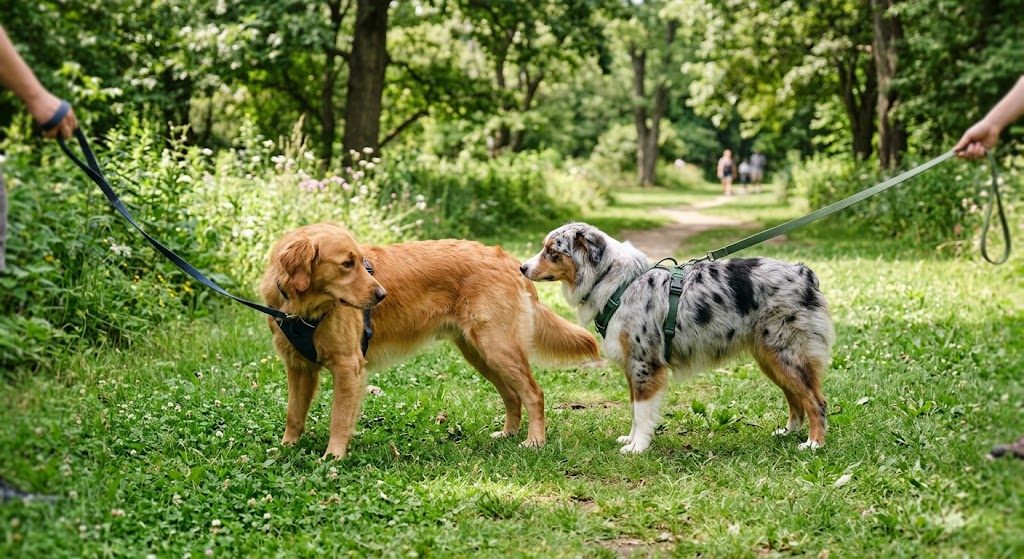
Short answer: Go slowly. Introduce the dogs on neutral ground, keep early meetings short and calm, manage food, toys, and space so nothing becomes a fight, and reward relaxed behavior. Most pairs need weeks to settle, and some need months. Learn the signs that mean “keep going” and the signs that mean “slow down,” and call a certified trainer if the dogs fight more than once.
Before the dogs meet: set up the home
A good introduction starts before the first sniff.
| Item | Setup |
|---|---|
| Space | A baby gate or closed door so the dogs can be kept apart, plus a quiet retreat for each dog |
| Food | Separate bowls, fed in different areas |
| Chews and toys | Pick up high value items at first, since these are the most common trigger |
| Beds | One per dog, in different spots |
| Gear | Two leashes, treats, and a calm helper so each dog has its own person |
| Health | Both dogs healthy and up to date on vaccines, and a vet check for the new dog |
The best way to introduce dogs: a 4 week plan
Move to the next stage only when the dogs look relaxed. If they do not, repeat the stage. There is no prize for going fast.
| Stage | When | What to do | Move on when |
|---|---|---|---|
| 1. Neutral meeting | Day 1 | Walk both dogs on leashes in a neutral spot, not your yard. Start side by side at a distance, then allow a few seconds of sniffing before walking on | Both look loose and curious |
| 2. Home, kept apart | Days 2 to 3 | Use a gate or door. Swap bedding so each dog learns the other’s scent, and feed on opposite sides of the barrier | Both stay relaxed near the gate and eat calmly |
| 3. Short supervised meetings | Weeks 1 to 2 | Brief meetings of 5 to 10 minutes in a neutral room, with rewards for calm behavior. Separate them when you cannot watch | Loose bodies, play bows, and easy breaks |
| 4. More time together | Weeks 3 to 4 | Lengthen the sessions while you watch closely. Keep food, chews, and bedtime separate | No tension around objects or space |
| 5. Shared home | Month 2 and beyond | Add short unsupervised periods slowly. Many households keep meals and high value chews separate for good | Calm behavior for weeks in a row |
Green, yellow, and red signals
Check this after every meeting.
| Light | What you see | What to do |
|---|---|---|
| Green: go on | Loose, wiggly bodies, play bows, sniffing then moving on, relaxed mouths, taking breaks | Continue to the next step at a steady pace |
| Yellow: slow down | Stiff or frozen posture, staring, lip licking, tail tucked, one dog hiding or constantly pestered, guarding a toy | Go back a stage and shorten meetings |
| Red: stop and separate | Hard stare with raised hackles, growling with lunging, snapping or biting, one dog pinned or chased with no escape | Separate calmly and talk to a trainer before continuing |
Do not punish a growl. A growl is a warning, and punishing it can teach a dog to skip the warning next time.
Play or fight? A quick check
| Play | Fight |
|---|---|
| Bouncy, loose, exaggerated moves | Stiff, tense, direct |
| Roles swap, so the chaser becomes the chased | One dog is always chased or pinned |
| Play bows and pauses | No breaks, and it keeps escalating |
| Relaxed, open mouths | Hard stare, tight lips, raised hackles |
| Dogs come back for more after a break | One dog tries to leave or hide |
Unsure what you are seeing? The Dog Body Language Decoder helps you read stress and comfort signals.
How long does it take for two dogs to get along?
Often a few weeks to a few months. Some pairs become best friends in days, others settle into polite coexistence, and both outcomes can be a healthy home. If the new dog is also adjusting to a new home, give that dog time too, and see the 3 3 3 rule for dogs for what to expect in the first days, weeks, and months.
How to stop dogs from fighting
If a scuffle happens, safety comes first for you and for both dogs.
- Stay calm and make a loud noise, such as a clap, a shout, or dropping something, to interrupt them.
- Put a barrier between them, such as a board, a large cushion, a baby gate, or a blanket over one dog.
- Never reach between the dogs with your hands or grab a collar. Most bites to people happen this way.
- Once they are apart, leash them and separate them into different rooms to cool off.
- Check both dogs for wounds. Call your vet about any bite or puncture, even a small one.
- Restart the introduction at an earlier stage, and bring in a certified trainer or behaviorist if it happens again.
Mistakes that make things harder
- Forcing a face to face meeting on a tight leash. A tight leash adds tension. Keep it loose and keep moving.
- Skipping neutral ground. Dogs can be protective of their own yard or home.
- Leaving them alone together too early. Stay close until the dogs are clearly relaxed.
- Giving the newcomer all the attention. The resident dog needs routine and affection too.
- Ignoring resource guarding. Toys, chews, beds, and even you can trigger it.
- Letting a puppy pester an older dog. Give the older dog a gate or a retreat, and step in when the puppy will not stop.
Special cases
A puppy and an adult need supervision, because puppies have no manners yet and adult dogs may need breaks. A senior dog needs a quiet spot the newcomer cannot reach. A shy or nervous dog may need longer at each stage, and that is fine.
When to get help
- Fights that happen more than once, or any fight that causes injury
- Constant guarding of food, toys, or people
- One dog hiding, refusing to eat, or acting afraid
- Tension that does not improve after several weeks
Start with your vet to rule out pain or illness, then contact a certified trainer or behaviorist. For general routine and skill work, the Dog Training Plan is a helpful starting point.
Still deciding whether a second dog is right for you? The Am I Ready for a Second Dog Quiz can help you think it through before you bring one home.
FAQ
How to get two dogs to get along?
Introduce them on neutral ground, keep early meetings short and calm, manage food, toys, and space, and move through the stages only when both dogs look relaxed.
How to make two dogs get along?
You cannot force it. Give them structure, space, and rewards for calm behavior, and let the bond build at their pace.
What is the best way to introduce dogs?
Start with a neutral walk, then keep them apart at home with a gate, swap scents, and add short supervised meetings before increasing time together.
How long does it take for two dogs to get along?
Often a few weeks to a few months. Some pairs take longer, and polite coexistence can also be a good outcome.
How do I stop my dogs from fighting?
Interrupt with a loud noise, use a barrier, never grab a collar or reach between them, separate them, check for wounds, and restart slowly. Call a certified trainer if fights repeat.
Should I let my dogs work it out?
Brief, mild corrections such as a quick air snap are normal. Real fights are not, so separate the dogs and slow down.
Is getting a second dog a good idea?
It depends on your time, space, budget, and your current dog. The second dog quiz helps you decide before you commit.
General information, not veterinary or behavior advice. If your dogs are fighting or injured, contact your vet and a certified trainer or behaviorist.