
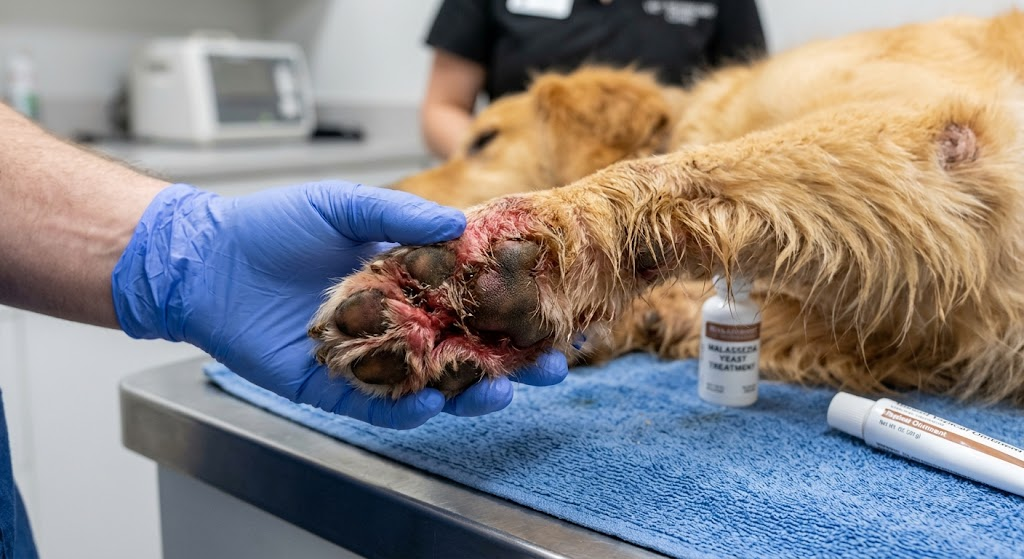
A dog paw yeast infection usually shows up as red, itchy, greasy paws with a musty smell, often compared to corn chips. It happens when a yeast that normally lives on the skin grows out of control, most often because of moisture, allergies, or another underlying problem. It is common, treatable, and very likely to come back if the root cause is never addressed.
Most articles stop at a list of home remedies. This guide focuses on what actually works: how to tell yeast from other paw problems with a Paw Clue Check, a weekly 60 second paw routine that catches trouble early, and a section on why it keeps coming back and what to do about it.
This article is general education and does not replace advice from your veterinarian. Yeast infections can look like other skin problems, so a vet exam is the only way to know for sure.
The Quick Answer
- Signs: Red, itchy paws, constant licking, a musty or cheesy smell, greasy brown discharge, and rust colored staining on the fur.
- Cause: Overgrowth of a skin yeast, usually triggered by allergies, moisture, or an underlying health issue.
- Treatment: Vets typically use medicated wipes, shampoos, or sprays, sometimes oral antifungal medicine, and they treat the underlying cause.
- Home care: Keep paws clean and dry. Do not use human creams or leftover medicine.
- Prevention: Dry paws after walks, trim hair between the toes, and manage allergies.
What Is a Yeast Infection in Dogs?
A small amount of yeast, most commonly one called Malassezia, lives on healthy dog skin without causing trouble. When the skin becomes warm, damp, oily, or inflamed, the yeast multiplies and irritates the skin. Paws are a favorite spot because the spaces between the toes stay warm and moist, and dogs lick them constantly, which adds even more moisture.
A yeast infection is usually secondary. That means something else, such as allergies, set the stage. This is the most important thing to understand, and it is why treating only the paws often fails.
Signs of a Yeast Infection on Dog Paws
- Itching and licking or chewing the paws, sometimes more at night
- Red skin, especially between the toes and on the pads
- A musty, sweet, or cheesy smell, often compared to corn chips
- Rust or reddish brown staining on light colored fur from licking
- Greasy or waxy brown discharge, especially around the nails
- Dark or thickened skin in long standing cases, sometimes called elephant skin
- Hair loss around the paws
- Brown or irritated nail beds
One paw may be affected, or several. Many dogs have it on all four.
Paw Clue Check: Is It Really Yeast?
Many paw problems look alike. This is a general guide to help you describe what you see. Several can happen at once, and only your vet can confirm with a skin test.
Yeast: Musty smell, greasy brown residue, rust staining, redness between toes, constant licking.
Bacterial infection: Pus filled bumps, crusts, sores, swelling, and more obvious pain. Often shows up alongside yeast.
Allergies: Itchy paws that come and go with the seasons, or after certain foods, often with itchy ears, face, or belly too. Allergies are a top trigger for yeast.
Contact irritation: Redness after walks on treated lawns, cleaning products, or de icing salt, often limited to the pads and fading with rinsing.
Mites or other parasites: Intense itching, hair loss, and crusting. Needs a vet diagnosis.
Injury or a foreign object: Limping, a single sore paw, a visible cut, or something stuck between the toes.
If your dog is limping, bleeding, or has swelling or pus, see your vet soon instead of treating at home.
Why Do Dogs Get Yeast Infections on Their Paws?
- Allergies, both environmental (pollen, dust, mold) and food related, are the most common underlying cause
- Moisture from rain, damp grass, swimming, baths, or constant licking
- Humid weather and sweaty paws
- Skin folds and hair between the toes that trap moisture
- Hormonal or immune conditions, such as hypothyroidism or Cushing’s disease
- Medications such as long term steroids or antibiotics, which can shift the skin balance
- Breed tendencies: West Highland White Terriers, Basset Hounds, Shih Tzus, Cocker Spaniels, Labradors, Poodles, Dachshunds, and bulldogs are often affected
- Excess weight, which can increase skin folds and moisture
Check whether extra weight may be a factor with our dog weight and body condition score checker.
How Vets Diagnose and Treat It
Your vet will look at the skin and usually press a piece of tape or a swab on the area to look at it under a microscope. This quick test shows whether yeast, bacteria, or both are present. Your vet may also look for the underlying cause, such as allergies or an endocrine problem.
Common treatments include:
- Medicated wipes, shampoos, foams, or sprays with antifungal ingredients
- Topical creams or ointments prescribed for your dog
- Oral antifungal medicine for severe or widespread cases
- Treatment for bacterial infection if present
- Allergy management, such as a food trial, allergy medicine, or other therapies
Treatment often takes several weeks, and your vet may want a recheck. Finish the full course even if the paws look better sooner, because stopping early can let the yeast return. Costs vary by region and what tests are needed, so for a rough idea try our dog vet cost estimator, and compare coverage with the dog insurance cost calculator if skin problems keep recurring.
Safe Home Care While You Wait for the Vet
These steps support your dog and do not replace treatment.
- Keep paws clean and dry. After walks, rinse or wipe away dirt and moisture, then dry thoroughly between the toes.
- Reduce licking. Ask your vet whether a cone, a soft cover, or a breathable bootie is appropriate. Constant licking keeps the paws wet and makes everything worse.
- Wash bedding often. Warm, damp bedding keeps yeast happy. A waterproof orthopedic dog bed with a washable cover is easier to keep clean.
- Trim long hair between the toes or ask your groomer to. See how often to groom with our dog grooming schedule calculator.
- Note what your dog eats and when the itching gets worse.
What Not to Do
- Do not use human antifungal or steroid creams on your dog without your vet’s guidance. Dogs lick them off, and some ingredients are unsafe to swallow.
- Do not use leftover medicine from a previous problem.
- Do not scrub the skin harshly or use strong disinfectants.
- Do not ignore open sores, swelling, pus, limping, or a strong smell.
- Do not skip the vet if the paws are not improving within a few days.
What About Apple Cider Vinegar and Coconut Oil?
These are the most searched home remedies, so here is the honest answer.
Apple cider vinegar: There is no solid proof that it clears a yeast infection. It can sting and burn red, cracked, or raw skin and may make licking worse. If you want to try it, ask your vet first, and never use it on open, bleeding, or broken skin.
Coconut oil: Evidence that it treats a yeast infection is limited. It can leave a greasy film that traps dirt and encourages more licking, and some dogs get a stomach upset from eating it.
Neither replaces a vet visit and a proper skin test. If a home remedy helps for a day and the problem returns, the underlying cause still needs to be found.
Why It Keeps Coming Back (and What to Do About It)
If you have treated the paws once and the problem returns, the yeast is probably not the real problem. Here is where to look.
- Allergies are still active. Talk to your vet about environmental allergy control and a structured food trial if food allergy is suspected. Our dog food sensitivity test can help you organize what you have noticed before the visit.
- Moisture is not controlled. Dry paws every time, especially after rain, baths, or swimming.
- Hair or skin folds trap moisture. Keep hair trimmed and folds clean and dry.
- Treatment ended too early. Complete the full course your vet prescribes.
- An underlying condition was never checked. Recurring skin infections can point to a hormonal or immune issue, so ask your vet about testing.
Weekly 60 Second Paw Check
Make this a habit once a week, and you will catch trouble early.
- Look: Spread each toe gently and check between them and around the pads.
- Smell: A musty or corn chip smell can be an early warning.
- Feel: Look for warmth, swelling, or dampness.
- Check the nails: Look for brown staining or discharge at the nail beds.
- Watch the licking: Note how often your dog licks or chews its paws.
- Dry and trim: Dry any dampness and trim long hair between the toes.
Write down anything unusual with the date, so you can show your vet a clear timeline.
How to Help Prevent Paw Yeast Infections
- Dry paws after every wet walk, swim, or bath.
- Rinse off pollen and dirt during allergy season.
- Keep hair between the toes trimmed.
- Keep nails at a healthy length.
- Manage allergies with your vet.
- Keep your dog at a healthy weight.
- Wash bedding regularly and keep sleeping areas dry.
- Schedule regular check ups so skin changes are caught early.
Frequently Asked Questions
What does a yeast infection on a dog’s paw look like?
The skin is usually red and itchy, often with greasy brown discharge, rust colored staining on the fur, and a musty smell. Chronic cases can cause dark, thickened skin.
Why do my dog’s paws smell like corn chips?
That smell is often caused by yeast or bacteria on the paws. A mild smell can be normal, but a strong musty odor with redness and licking suggests an infection worth checking.
Can a dog paw yeast infection go away on its own?
Unlikely. Mild cases may improve with better drying and cleaning, but most need veterinary treatment and attention to the underlying cause.
How do you treat a dog paw yeast infection at home?
Keep paws clean and dry, reduce licking, wash bedding, and trim hair between the toes while you arrange a vet visit. Do not use human creams or leftover medications.
Is apple cider vinegar good for dog paw yeast infections?
There is no solid proof it works, and it can sting irritated skin. Ask your vet before trying it, and never use it on open or broken skin.
How long does a dog paw yeast infection take to clear?
Often several weeks with proper treatment, depending on how severe it is and whether the underlying cause is managed. Follow your vet’s plan and recheck schedule.
Is a paw yeast infection contagious to other pets or people?
It is generally not considered contagious in the usual sense, because it comes from overgrowth of yeast already on the skin. Still, wash your hands after handling infected paws.
Can food cause yeast paws in dogs?
Food allergy or sensitivity can be an underlying trigger in some dogs. Ask your vet about a structured food trial rather than switching foods on your own.
The Bottom Line
A dog paw yeast infection is common, itchy, and smelly, but it is treatable. The real key is finding out why it started, whether that is allergies, moisture, or another issue. Use the Paw Clue Check to describe what you see, keep paws dry, avoid human creams, and see your vet for a skin test and a treatment plan.
Make the weekly paw check a habit, and most recurrences can be caught early.