
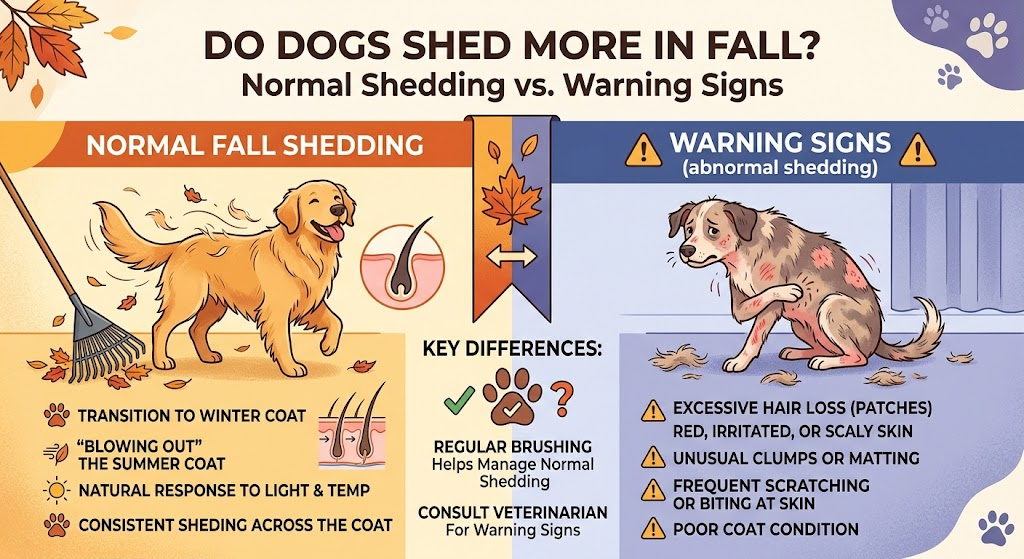
Short answer: Yes, many dogs do. As days get shorter, the body swaps the lighter summer coat for a denser winter one, and the old hair comes out. It is most noticeable in double-coated breeds such as Huskies, Golden Retrievers, Labs, and German Shepherds, and it usually settles within several weeks. Shedding that leaves bare patches or comes with skin problems is not normal and deserves a vet visit.
Why dogs shed more in fall
Seasonal shedding is driven mostly by changing daylight, with temperature playing a smaller role. Shorter days signal the body to prepare a thicker coat, so loose hair from the summer coat falls out to make room.
Dogs that live mostly indoors under steady artificial light often shed more evenly through the year, so their fall peak is less obvious. That is why two dogs of the same breed in different homes can look very different in October.
Fall shed vs. spring shed
| Fall | Spring | |
|---|---|---|
| What is happening | Summer coat out, thicker winter coat in | Winter undercoat out, lighter coat in |
| What it looks like | Steady loose hair, often milder | Often heavier, with clumps of undercoat in many double-coated dogs |
| Typical duration | A few weeks | A few weeks, often more dramatic |
This varies by breed and by dog. If your dog’s fall shed looks milder than spring, that is common.
Normal fall shedding vs. a problem
| What you see | Usually means |
|---|---|
| Lots of loose hair, healthy skin, full coat | Normal seasonal shed |
| Heavy shedding that fades over several weeks | Normal |
| Bald or thin patches | See a vet |
| Red, flaky, or irritated skin, constant scratching | See a vet |
| Dull, brittle coat with sudden heavy loss | See a vet |
| Hair loss with fatigue, weight change, or increased thirst | See a vet |
A vet may look at allergies, parasites, skin infections, stress, and hormonal conditions. Seasonal shedding by itself should not leave bare spots.
A brushing plan by coat type
Most guides say “brush more” and stop. Here is a more usable starting point during the peak weeks:
| Coat type | Examples | Peak-season brushing |
|---|---|---|
| Double coat, thick undercoat | Husky, Golden Retriever, German Shepherd, Lab | Daily, with an undercoat rake or deshedding tool |
| Short single coat | Beagle, Boxer, Dalmatian | 2 to 3 times a week with a rubber brush or grooming mitt |
| Long single coat | Yorkie, Shih Tzu, Maltese | Every other day, to prevent tangles |
| Curly or low-shedding coat | Poodle, Bichon | Regular brushing and grooming. Loose hair gets trapped in the coat instead of falling out |
Adjust to what you see. If hair is coming out in handfuls, brush more often.
Mistakes that make shedding worse
- Shaving a double coat. The coat helps regulate temperature, and shaving can change how it grows back. Brush it out instead.
- Over-bathing. A bath can loosen dead hair, but frequent baths dry the skin and can increase flaking.
- Skipping brushing, then catching up all at once. Short, regular sessions are easier on your dog’s skin than one marathon.
- Buying supplements first. If the coat looks dull, talk to your vet before adding anything to the diet.
Plan the season
To estimate when your dog’s shed is likely to peak, use the Dog Shedding Season Calculator. For a brushing and bathing rhythm that fits your dog’s coat, use the Dog Grooming Schedule Calculator.
FAQ
Do dogs shed more in the fall?
Many do, especially double-coated breeds, as they grow a thicker winter coat.
Why do dogs shed more in the fall?
Shorter days signal the body to replace the summer coat with a denser one.
How long does fall shedding last?
Usually a few weeks. If it drags on, or comes with bald spots or skin problems, see your vet.
Is it normal for my dog to shed a lot in October?
Yes, if the skin looks healthy and there are no bare patches.
Do indoor dogs shed in fall too?
Yes, but often less obviously, because steady indoor light blunts the seasonal cue.
General information, not veterinary advice.